
Interview with Amber Frizzell
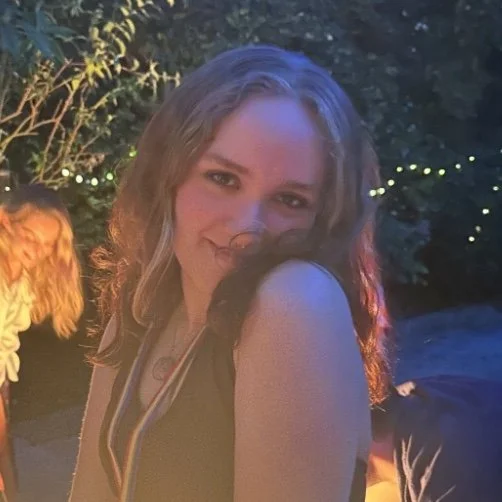
Amber is a 3rd year Classics and Drama student. She has always loved combining both parts of her degree where she can. She is from Oxford and enjoys musical theatre, making art, and Phoebe Bridgers. She is also a semi-professional Michael Scott impersonator!
Amber’s top tips:
Try not to get overwhelmed by all the resources.
Pick modules that interest you, and consider teaching styles when making module choices.
MIEKE: For this interview, I'm joined by Drama and Classics undergraduate Amber talking about her essay on Lavinia in The Aeneid. If you could start by telling us a bit about your piece and what interested you in this topic.
AMBER: The brief was to pick a character that has not much of a voice within the epic, and so to me, that was obviously Lavinia. She becomes Aeneas’s his wife at the end, and it's her fate, she doesn't get any agency in that. And so, I feel like that is the epitome of the brief of the essay. Also on a personal level, I found her character interesting because she's 19 In the epic and I was 19 when I wrote this, so I felt like there was a pendulum of relatability.
MIEKE: Can you tell me a bit more about The Aeneid and Lavinia's role in it? I know that she says nothing, but she obviously does have a role, and The Aeneid is not necessarily something everyone will have read. So, if you could explain a bit more about it?
AMBER: Basically, as the title suggests, it's about a character called Aeneas who's a Trojan, and he goes on this epic journey where he's meant to have this destiny where he founds Rome, and his prophecy is that he marries a foreign wife and his foreign wife is Lavinia. She lives in Italy. As you said, she doesn't speak at all throughout the entire epic, everything is dictated for her by Aeneas, by her father, by a character called Turnus who is meant to be her suitor when we are first introduced to her, her character and her people. The gods as well, decide her fate. A lot of her character drives the plot in a very big way because it's the reason why Aeneas is in Italy-to found Rome, or to found what will be Rome. And so, she drives the plot, but she doesn't do anything for her character.
MIEKE: So, did you find it important to give her a voice because she drives the plot so much?
AMBER: Yeah, I feel like a character with that much sway within a story, a character that, similar to Helen in The Iliad, causes wars but, is completely without responsibility for them, because everything is decided for her and she just happens to be a woman placed in the center of everything. And that's interesting, I write about it in my essay, she mimics Helen in her function in the epic, which I quite like to explore.
MIEKE: Thank you. How did you go about planning, researching, and drafting this piece?
AMBER: My writing style is very chaotic. I have a lot of ideas and I'm not very good at putting them into words, so I just tend to write down everything I'm thinking of whenever it comes to me. And then restructure and order those later. And I feel like that does really help with this style of essay because it's a creative essay. I'm a drama student so I've written it in a monologue form. It very much comes to me naturally, a lot more than writing regular classics essays. I feel like a lot of it was just a lot of feminine anger that I had at the time. So, I was writing stuff and then revisiting it and changing the tone to mimic Virgil’s poetry style. And then I felt like it was a lot easier for me to introduce the critical use of it, because I have them addressing them personally and addressing the way she's portrayed, because that formalised the essay. I felt like it was much easier than doing a regular essay.
MIEKE: Thank you. So was it challenging for you to create a voice for Lavinia, considering she doesn't have any lines? How did you find it, creating this monologue for her without knowing how she would speak?
AMBER: I found it easier because it means she's somewhat of a blank slate. I used an online version of the text, searched ‘Lavinia’ and found every place that she is mentioned and what people say about her. Her name is only mentioned nine times and that's what I begin with. In the essay I write all the times she’s mentioned. Also looking at all the critical reception on her from different writers who have maybe written poetry about her or other stories. I felt like it was quite nice to incorporate theirs and I write a little bit about it in the evaluation, which was part of the essay that, none of the sources that I found were particularly new within the last couple of years, they were fairly old and so I feel like they didn't have much of a nuanced idea of female sexuality. I feel like they were very much saying ‘she's the virgin’ or ‘she is tainted’ and I feel like it's a very, very complex web of identity. I think I was able to try and encapsulate that quite well.
MIEKE: I saw in your essay you've mentioned a few poets that had maybe written about Lavinia, and you didn't seem to agree with them. What kind of secondary reading helped you with this piece? Did you find that those poems helped you establish what you wanted for her character in your piece?
AMBER: Well, I think it was quite useful that I decided the premise of the essay was to address Virgil, it was Lavinia addressing Virgil on a stage and saying, ‘why have you depicted me in this way?’ and drawing a similarity between Aeneas and Virgil as these men that dictate her life. And I feel like looking at other critical receptions of her is a similar thing because other people are speaking for her, whereas with my essay, obviously I'm the I'm the author, but it's Lavinia, speaking for herself in a proper big monologue, which I feel like is the exact agency she needs. Looking at other receptions of her, “good or bad,” was helpful either way, but ultimately this is a new version of her video and it's her new voice which I found was quite easy given the critical things that I'd found.
MIEKE: Thank you. What challenges did you face while writing the essay, and how did you overcome them?
AMBER: My time management needs work. For me, creative things mean that I must have a very messy brain. And so, I did write a lot of this in the early hours. It helps me create messy stuff and then I can wake up the next morning and refine it and then do the same the next night and the week after that. And I feel like it often feels like that's leaving it to the last minute, but to me, that's like just the process that works. I need to feel really exhausted to do it.
MIEKE: Thank you. What do you think you've gained from writing the essay? Did you learn anything new or was this a new way of structuring things for you?
AMBER: It's new because essentially, it's a drama essay for me. It's what I do in drama for a lot of my modules and so I had to kind of remember that, but also remember that I'm writing this for a classics audience, and there were some bits that I wrote, especially at the beginning that I thought: I don't know if this is appropriate. But I think the explanation at the end was very beneficial for the actual creative part of the essay.
MIEKE: What do you think about combining drama and classics? Do you think that this is a good combination? Is it something that you would like to do more of?
AMBER: Yeah, that's the reason I chose Royal Holloway because it's the only uni in the UK that does a Classics and Drama degree, as a combined degree. I'm doing one of the second-year modules by request because it's Greek theatre in drama and that wasn't offered to me when I went into my second year. And again, I really like choosing models that overlap. I feel like to me there's a very obvious Venn diagram between those two subjects, but a lot of people don't think that, and I feel like here was kind of one of the places where I managed to find that which really helped because I feel like it's where my strengths lie, to be honest.
MIEKE: Yeah, it's a very, very interesting piece. I think even if you don't study classics or drama, that you can gain a lot from it. Looking back at your second year, what would your key advice be for students in the Classics department?
AMBER: You don't need to get overwhelmed with the number of resources that are available to you, Classics is one of the oldest subjects that are, and it's probably read about one of the most with different perspectives and shifts in, social views of everything changing over time. And so, there's so much material around you. You don't need to feel overwhelmed by it. Just pick a couple and move on.
MIEKE: Absolutely. Did you find that there was a big jump from first year to second year with classics specifically or did you find that it was smooth sailing?
AMBER: I found that the pressure that I put on myself was a lot higher because obviously this year counts a little bit more. I also feel like the modules that I chose were way more suited to me because obviously in first year we don't get as much of a choice, so I was having to do history modules which is really not my jam. And so, I feel like that was kind of easier in a sense, but it also meant that I was a lot more engaged with lessons that I was actually in.
MIEKE: So would you recommend that students pick modules that are more suited to their interests rather than something that I think would look good.
AMBER: Definitely I and I also think that considering teaching styles, if you've like had like a good like array of teachers in first year, if there are some that you think, the way they teach is very much making sense to you, then I would actually follow your gut with that, because I've done that with some of my other modules like Philosophy and and it worked out brilliantly. I absolutely loved to go to each lesson for Philosophy this year. So, I think doing that would be a good decision.
MIEKE: Thank you for joining me, Amber. It's been interesting listening to what you have to say about your essay.
AMBER: Thank you.