
Interview with Caroline Soderlund
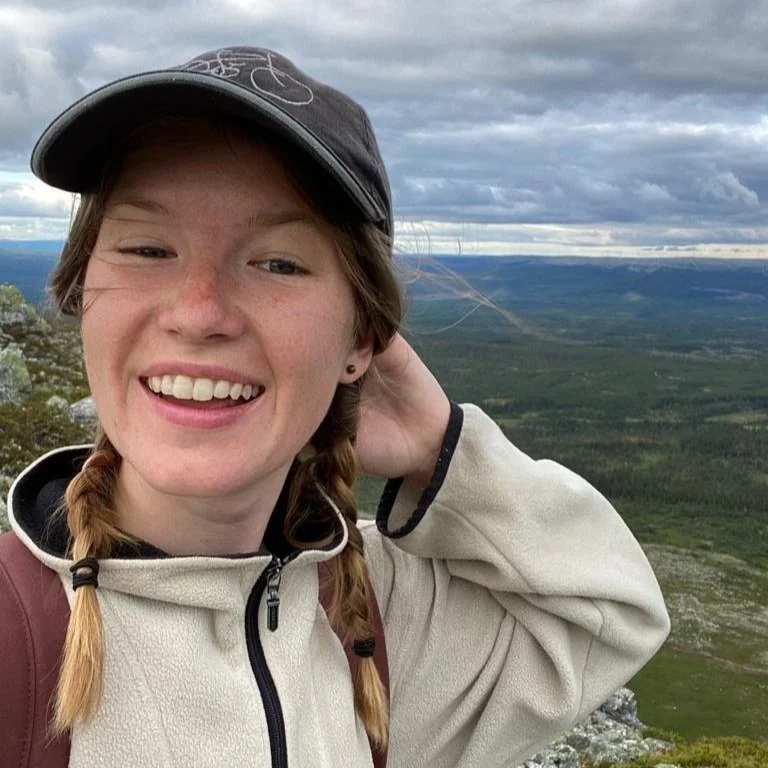
Caroline is a Swedish-Estonian English and Creative Writing student in her third year. She loves writing fantastical, fairy tale-like stories and poetry that works across languages, and her biggest inspirations currently are J.R.R. Tolkien, Neil Gaiman and Margaret Atwood. When she's not reading or writing, she can also be found playing the violin, going on hikes, and drinking lots of tea.
Caroline’s top tips:
Push your creativity and take advantage of this time by writing lots!
Make sure you draft your work.
Integrate your descriptions into the story- don’t have chunks of description, it will make it too clunky!
ISOBEL: For this interview I'm joined by Caroline, who's an English and Creative Writing student. Today, we're going to be discussing her work on creative writing and short stories. So, do you just want to start to talk a little bit about the writing and what interested you in the topic?
CAROLINE: Yeah! So, this was a short story that I wrote for a fiction module. I think what interested me about this story, or the topic, was the setting, mainly. I saw this image on Pinterest of skeletons in the water, and I thought it was very cool. So, that was kind of how I started writing about the setting. And then, as I kept writing, I was very interested in the characters and their relationship, sort of what would make someone hate someone enough to sacrifice them and yeah, I just thought it was quite fun to like, explore the city with them (in this piece).
ISOBEL: So in terms of planning it, you obviously had this inspiration (picture). So how did you then go from there? Did you kind of write down ideas of what you thought from it? Or did you have a bit of a research about the picture?
CAROLINE: I didn't really do any research! I think I always write my first drafts quite spontaneously! And with this one, I didn't really have a clear ending in mind. So, it kind of took a turn that I wasn't really planning from the beginning. And then like, once I have written my first drafts, I'll like, go back and rewrite the entire thing, knowing what I know! Then I’ll clean it up as I go along, yeah.
ISOBEL: I think drafting is so important, especially with this, it seems anything goes! You could come up with a completely different story to what you had in the first place, which is really cool. Were there any books or articles that you found useful?
CAROLINE: I didn't really have anything specific in mind as I was writing. But in hindsight I was quite inspired by Shirley Jackson's The Lottery, the ending of it. It's also a very big twist and it completely shocked me when I read it. But then, as you go back and read it again, the signs were there all along, I wanted to achieve that as well or a little bit of like, there are kind of clues? But then the ending just comes out of nowhere.
ISOBEL: Well, I thought your use of description was so good in this! When I was reading it, I could really imagine it in my head. So, do you have any tips for when you're writing stuff like this, how to adequately describe but not go too over the top? Because I feel like when you're trying to describe something, you just want to use all these words, but sometimes less is more.
CAROLINE: Well, thank you. I don't know! Making sure that the descriptions go along with the story, and the way that they're written, you'll use verbs and you'll make them alive or, say something in themselves. So it's not just like, “and this is where we are, and then this happens in this place”, but that they're integrated into the plot and into the dialogue and what happens. And also, that there's not just description in these chunks, but that you get little glimpses as the characters are talking or when other things are happening. Yes, with the descriptions they aren't like, separate things, but they're always, like, integrated and important in their own right. I really enjoyed writing the descriptions for this one. I was quite scared that it was going to be repetitive at first because there's only so many ways you can describe skeletons and ruins but I enjoyed coming up with new ways, pushing my own creativity and coming up with new things that they could see in the city. Yeah, I just had fun with it!
ISOBEL: I guess having this picture to go off of as well, every time you look at it, you kind of think of different ways to describe it. Did you have any challenges when you were writing it? You say you enjoyed it, but obviously I feel like every piece of work has a little bit of stress sometimes!
CAROLINE: So, I wrote this story for a workshop setting at first and it was about half of this (in length). And then for the actual assignment, I had to extend the story and make it make it longer, which is… I'm always the kind of person where I write way too many words, and then I have to cut down everything. So, it was really strange to me to have to sit down and write more into a story, and I found it quite daunting at first. I think I just had to have fun with it and relish in the extra time, and really think about the details and where you could take time. I just had to have fun with it! I think another thing that was a bit of a challenge was how to give enough information to build suspense, but also not giving away the ending, or not giving away too much! It’s difficult because when I write, I obviously know everything that the characters know, but how much do I need to give the reader for it to make sense to them? So like in initial drafts, it did not give enough information to people who read it and gave me feedback. They got confused, or they didn't really understand what I understood! I had to come back and add some more dialogue and more clues. So, I mean feedback helps immensely with these challenges, getting another person's opinion on it is so important, especially with creative writing, I think. Because you have this big idea in your brain, and you need to know how it’s received by the people who look at it. Yeah. And then, like, once you get that feedback, just go back and be a bit ruthless with it. Don’t look at it as your baby, but be a bit mean about it. And like, if I read it and if I feel there's something wrong, like it's probably wrong and I need to do something about it!
ISOBEL: Sure. I think trial and error comes into play a lot, especially coming into your second year where you had all this feedback from your first year and now, you're trying to take all of it and put it into your work. I think feedback is so important! And drafting… What have you kind of gained from the writing? Was there something that you hadn't thought of before that now you're like “I use this in every piece I do.”?
CAROLINE: I had one practical piece of feedback that I got from my lecture about adverbs, and how to use adverbs well, and what makes a good adverb or a bad adverb, which is quite helpful! I think about that now all the time. An adverb has to be something that adds new information. I think in a first draft I used the word “eerily”. And he was like, no, you can't do that because already from skeletons and echoing ruins, it is already eerie. It's eerie but because you tell us, it takes away from the eeriness. I wasn't really aware that I was doing that before, but now I think about it all the time. Yeah, I think also this story pushed me to think about my dialogue more. I really, really enjoy writing. Dialogue is one of my favorite things to do but in this one I had to think about their voices a lot. And had to develop my ear for how to hear the characters, and how they would speak. With that, I learned more of how to be aware of what the characters are thinking, what they're feeling, and what they know at all times. In the first draft, I didn't really know where it was going! So, I didn't really know what the boy and the cat and the story knew. But then as I went back to the story a second time, then I knew, so I had to change some things that he would say, what he would sound like, and what he was feeling. I think I just tried to find ways that these characters would speak, and I tried to hear them in my head the way that they would speak and find their specific voice and their way of speaking. So, I wanted to make the girl sound quite young and childlike in the way that she spoke… How she would ramble or find these things that would work for that type of character, yeah. I think I just try to hear them in my head like I would watch a movie and find these little hooks or ways into how they would speak and act.
ISOBEL: All that said, looking back at your second year in general, what would be your number one advice for students who are doing this course, or just in creative writing in general?
CAROLINE: Second year's quite overwhelming for a lot of people, me included. It was a lot at the start. But then it's also really fun to be able to specialize more and write the things that you enjoy, and find your own style of writing- it can be a lot of fun! My advice would be to take advantage of this time and really try to enjoy it! And with creative writing, really take the opportunity to experiment with different styles and try new things! Push yourself to write better. Push your creativity and try to do more than you did before. You'll find your voice or your way of doing things. And like really also. Take advantage of the feedback and don't be afraid of getting feedback, especially the feedback that's harsher and more critical. That's what's really useful. My advice would be not to be afraid of it, take advantage of it. Because when people are mean about your work, I think it’s a sign that they respect you as an author and they know that you can do better. I think try to see it that way and use it to develop, because every everyone's got creativity and everyone can write, but it's what you do with it and how you try to hone your skills. It just takes practice, so use the time, I guess!
ISOBEL: Amazing. Thank you so much! I completely agree. Second year can be very daunting, you get criticized a lot, but it never means that your work is bad. It just means that there's so much more there to develop. Thank you!
CAROLINE: Thank you!