
Interview with Phoebe Newman
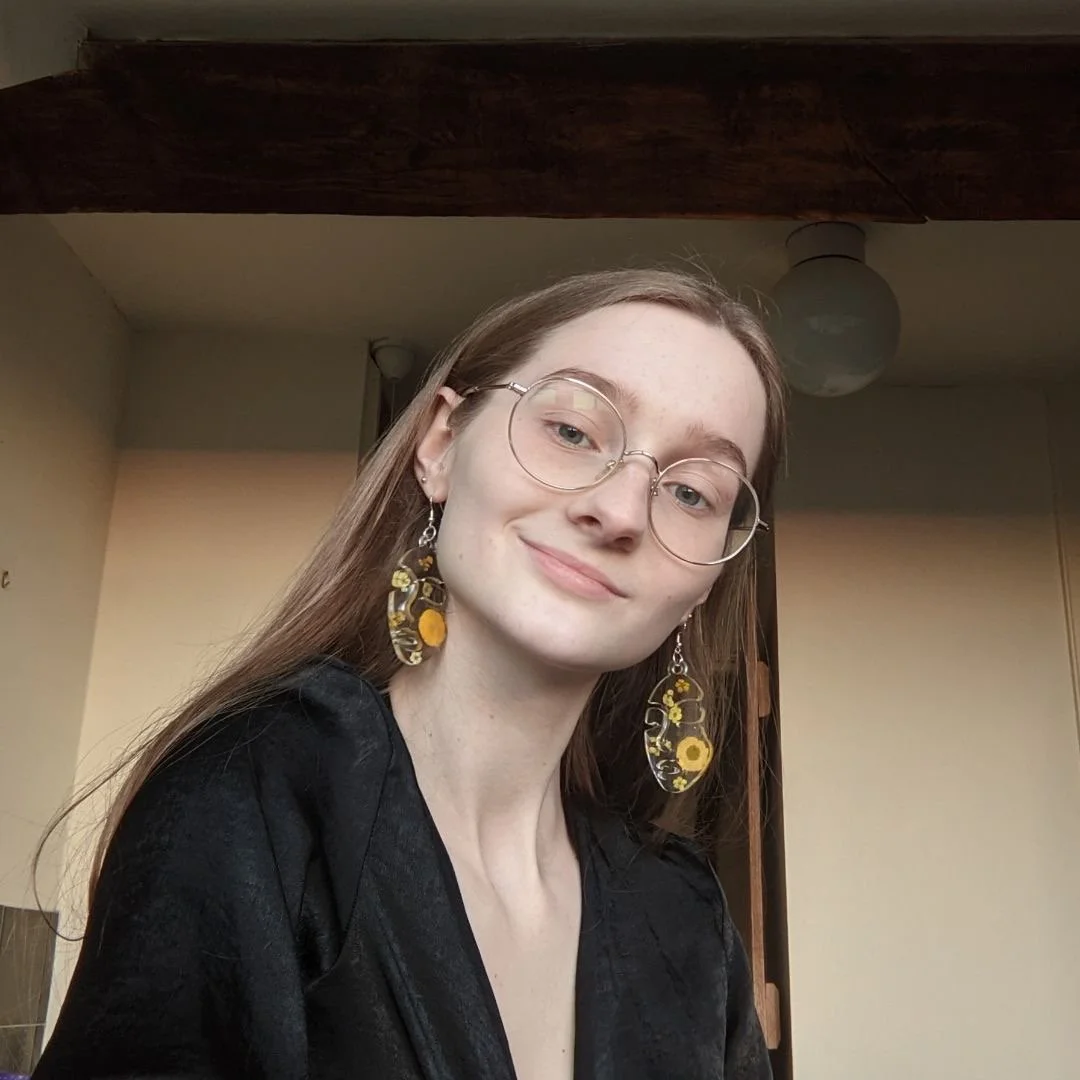
Phoebe studies Drama with Film. She grew up just a stone’s throw away from the RSC so theatre and performance have always been close to her heart. However, films were what got her through lockdown. She also enjoys figure skating, reading and Mario Kart.
CARMEN: Could you start by telling us your name and what course you're studying?
PHOEBE: I'm Phoebe, and I'm studying Drama with Film.
CARMEN: Could you tell us what your essay is about and what interested you in the topic?
PHOEBE: My essay was a theatre and culture essay about how performance may be used as a means of personal and social healing. I had to choose two case studies so I chose Gareth Malone's ‘Great British Home Chorus’ and Larry Cramer's ‘The Normal Heart’. I was interested in the question because it was different to topics I'd already covered in the presentation and other assignments. Also, I felt like it was quite relevant to the situation at the time with COVID and that was the path I wanted to go down with my answer so I thought it would be the most interesting. Also, it was quite easy to understand, and I could take it in my own direction without thinking ‘what if this isn't what the tutors want from me’. So I thought, easy path, straightforward, let's do it.
CARMEN: You’ve told us what enticed you by the question, why you chose it, but what was the process of picking that question out of the selection you were given?
PHOEBE: I had the most notes covering that topic and we learnt about tarantism in lectures. My backup question was the one on cultural appropriation but I had done my presentation on it, so I thought I’d go with the healing one. There were some others that did interest me, but I wasn't sure I could be as convincing in an essay on those topics.
CARMEN: When it comes to essay writing, preparing the essay is a massive part of it. So for you, how do you go about planning, researching and drafting your writing?
PHOEBE: This essay was a bit different because my lecturer, Ashely Thorpe, wanted a plan a week after the question was set. Usually, I would do all my research and then put it all together and make a plan, but I just had to do very simple research to begin with to get a vague idea of the kind of points I'd want to make and then I put it all into a Word document. I think this actually helped because I knew what sort of research I wanted to do after that point. After I'd done that, I went to Library Search and searched all the keywords I could think of: ‘performance’, ‘healing’, ‘Larry Kramer’, etc. and if there was a specific area I couldn't find on Library Search, I went onto Google Books which was helpful as well. I basically just got everything into one massive Word document, colour coded it and thought ‘okay, I kind of know where I'm going with this’. It was a bit of a long process but once I had the plan, the writing was sort of the easy bit. It still takes a lot of time, but at least I know where I'm going with it. Then, I just keep coming back to it and rereading it, making sure it makes sense. I’ll leave it for a few days, come back, that kind of thing, and then it gets there in the end.
CARMEN: As you said, with the planning, you didn't really have any option but to plan that essay and send it to your lecturer. Do you feel like that's something you'd like to do a bit more in the future; reach out to your lectures and get their advice on essay plans? Do you think that would be beneficial to you?
PHOEBE: Yeah, it was really helpful because Ashley gave us all general feedback and told us what we were doing right and what we were doing wrong. When you're at the start of the essay, it's really easy to fix the things that could go wrong so getting it out of the way at the start was really helpful and it let us know if we were on track or not, so I would do that again.
CARMEN: With your essay you had to find two case studies, and I can only imagine that involved quite a lot of research. How did you go about finding those case studies? You mentioned Library Search already, but apart from that, how did you go about finding them? What made them stand out? What interested you in them?
PHOEBE: I knew I wanted to do something about COVID and about AIDS because I thought there were a number of similarities and differences between them that would be interesting. So I spoke to the people around me, like I spoke to my teacher about it and got some advice and also spoke to my Mum. She was like “Gareth Malone, he’s a person.” It was basically just looking at everything I could find e.g., every kind of play that was made in the 80s surrounding AIDS and after that, what they actually did in relation to healing. When I found out that both of the case studies had donated money that they had raised from the performances to NHS charities and AIDS charities, it kind of made me think ‘they are going out of their way to support healing in both of these areas’.
CARMEN: Were there any particular books or articles that you found really useful for this essay?
PHOEBE: Most of the articles and books that I used were specific to my case studies, so it might not be as useful for someone else doing the same question but there was one book that I thought was more general and could actually be really useful for this topic and other topics. It was Sue Jenning’s ‘Introduction to Drama Therapy’. It gave me an understanding of the relationship between healing and drama on a more basic level so then I could apply it to the case studies that I'd found. It was also recommended by my tutor, so it’s worth a read for anyone interested in drama therapy.
CARMEN: We’ve already spoken about all of the positive parts of writing your essay, the research, the planning etc. but writing an essay is never easy. There's going to be hurdles. What challenges did you face whilst writing the essay and how did you go about overcoming them?
PHOEBE: The main challenge was finding case studies that hadn't been assigned by lecturers because we didn't know whether there would be a lot of research about them on Library Search. The challenge was knowing where to look and where to find information.
CARMEN: Did you mainly stick to Library Search or did you search elsewhere?
PHOEBE: I sort of ventured out into Google Books which was quite helpful, as was using Box of Broadcasts because the case study I had for the Home Chorus actually had an entire documentary series made about it. I would recommend looking everywhere you can! Afterwards, I put all of my research into one document and colour coded it so I knew what I was looking at that was related to certain points I wanted to make in my essay and then I knew what else I wanted to find out; it made it easier as I went along.
CARMEN: You’ve spoken a little bit about citing sources and in this essay you cite a lot of sources, but when you're first coming to uni, citing and referencing is not easy; it's a difficult thing to learn to do. Do you have any tips for that?
PHOEBE: If you're confused on how to do it, use CeDAS, they'll answer all of your questions. For my first essay I went to them and made sure I was using the right style. They also recommended I use a book called ‘Cite Them Right’, which is in the library and there's also a website for it. Basically, for any kind of referencing style, it tells you how to reference for different types of resources, like different books, different websites, YouTube videos etc. That made it really easy and was really helpful. When researching I’ll put the title of the book that I'm using as a header and then all of the points that I take out of that I will just bullet point below and write the page number at the end of the point that I'm making so I always know where I've got my point from, what page it is, and I'm never confused by who said what.
CARMEN: This was one of the first essays you would have done at the university. What do you feel you've gained from writing this essay?
PHOEBE: Because researching was such a big part of it I suppose the trial and error of that was really helpful; it taught me what not to do, what to do, where to look where not to look. It was just really useful researching my own sources from scratch and creating an essay with that which is something that you only figure out with experience after you've done the first one, but then after the first one's out of the way, it's less daunting for the following essays.
CARMEN: Finally, looking back at your first year, what would be your key advice or your top tip be for students starting out writing in the drama department?
PHOEBE: I would say use CeDAS because they're just really helpful. Give them any essay and they'll help you improve it and knockup your grade a bit and if something doesn't make sense for you with writing it, they'll be able to help fix that. Also, ask your tutors if you are confused about something, even if it seems small, like ‘what do I write on the cover sheet?’. Just ask them because everyone asks them all the time and they're used to it. Also, this might just be a me thing, but tell yourself the deadline is a week before it actually is. Then, you can go over without having to use an extension and you can use that week to just come back to it and tweak it and make it better.