
Interview with Rusty Thorne - talking about their ballet essay
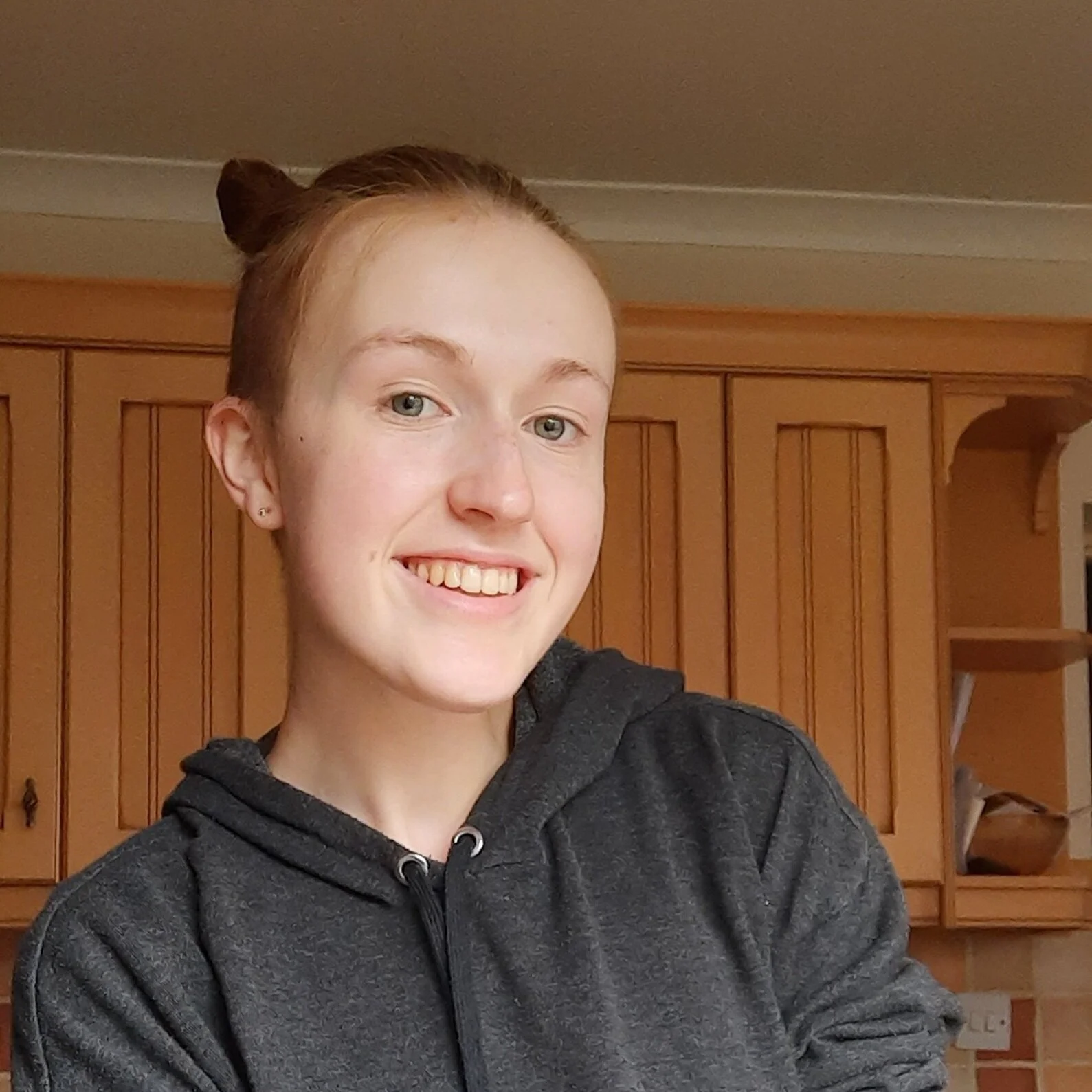
Rusty is currently in the midst of their third year studying a BA in English and Drama. Their favourite areas of study are queer theory and gender studies - in particular, the exploration of these concepts within theatre and literature. For them, writing and performing are both a creative outlet and a coping mechanism: a satisfying medium of self-expression. Outside of their degree, their interests include dancing and sleeping.
Rusty’s top tips:
Take advantage of the university’s resources.
Consume as much content as possible. YouTube is useful for drama students.
Look at your other modules and see if there’s relevant content there.
ISOBEL: I'm joined with Rusty today, who is carrying Drama on their back this year with two of their essays being shortlisted for First Ink! They are an English and Drama student. In this interview, we'll be discussing the politics of gender within the ballet industry. So, do you just want to start by telling us what your writing is about and what interested you in the topic?
RUSTY: Yeah! So, it's from a module called Dancing Bodies. We've done a case study on Matthew Bourne’s Swan Lake because he did an all-male production of Swan Lake, we did a case study on that and I found that really interesting. I'm a dancer myself, so I really wanted to delve into the history of why that was so controversial at the time, the ways that different cultures and different time periods have sort of impacted the way that culture is in the dance world today. So, I had a really fun time researching it.
ISOBEL: How do you go about planning and researching, or even drafting your writing?
RUSTY: We got a really long list of different questions we can choose from. I knew I was going to do that one pretty early on. I think if I'm choosing between a few questions, I'll do like a long mind map for each one and see which one I have the most ideas for. For me it was this one, and because I already sort of knew a little bit about it, I jumped straight in with research. Because we got to choose the case studies ourselves, we could do one that we'd already studied in the module, but then we had to find others by ourselves. So, I had a great time watching loads dance videos, ballets. And then I did all the critical reading first as well. I always want to know my topic as well as I possibly can before I plan my argument. I did all of that, did a load of reading. And then I structured, and then I wrote it doing the intro and conclusion last. I just always do it that way. I think it makes them make more sense.
ISOBEL: Were there any articles, books, or videos that you found really useful when researching for this one?
RUSTY: Not specific ones, but I had already done a module the term before called Queer Histories, which had a lot of like gender sources. So, I went back to a few of those and they were really handy. And a lot of sites where you can watch things. Honestly, YouTube was really helpful for this one because there's lots of the case studies involve videos. So, all of those resources that are available for everyone were really handy.
ISOBEL: Were there any challenges that you faced when you were writing this and how did you overcome them?
RUSTY: I think it's probably the same as you as a Joint Honours student, time management. Because the actual classes and things that we go to, they're always really well timed. But the assessments are not, and you always end up with deadlines that are in the same week or within two weeks of each other! And you have loads of essays to do at once… Extensions are really handy. I'm pretty sure I used an extension on this essay because I had too many things to do at one time, and I also over researched because I really liked this topic! So, I guess left myself less time to actually do the writing because I really liked that reading. So yeah, late nights and extensions were a life saver!
ISOBEL: What do you think that you've particularly gained from writing this one? And, do you think that there was something that you didn't know before that now you'll carry with you and use it for everything you write?
RUSTY: This was in spring term of the last academic year and that was kind of a time where I was figuring out my academic voice and my way of writing, rather than just trying to do something I thought sounded good. I was learning to do it in a way that sounded like me at the same time. So that's just something that I will always use going forward. And I guess just research skills. I already have been working on them, but researching really thoroughly before even planning just makes a better essay.
ISOBEL: Second year really is the time to focus on that, making sure that the essay sounds like you and making sure that your style is shown on the paper, which I think is just so important! Looking back at your second year now, what would be your number one advice for students, particularly in the drama department?
RUSTY: Use the resources available for you. There are so many sites that the drama department and the uni pay for - and you won't have access to them forever. It's only for three years, so really take advantage of them. Yeah, I would say just do your research! Knowing your topic from all angles is only going to further your education. It's only going to make everything you do better whether or not it happens to be relevant in an essay. I think I only used about half the things I read. But I still had a really fun time, and it still was informing choices I was making. So yeah! Also: enjoy learning for the sake of learning and not because you want to get a good mark on an essay.
ISOBEL: Thank you so much for coming on and talking about the essay.