
Interview with Amal Naveed
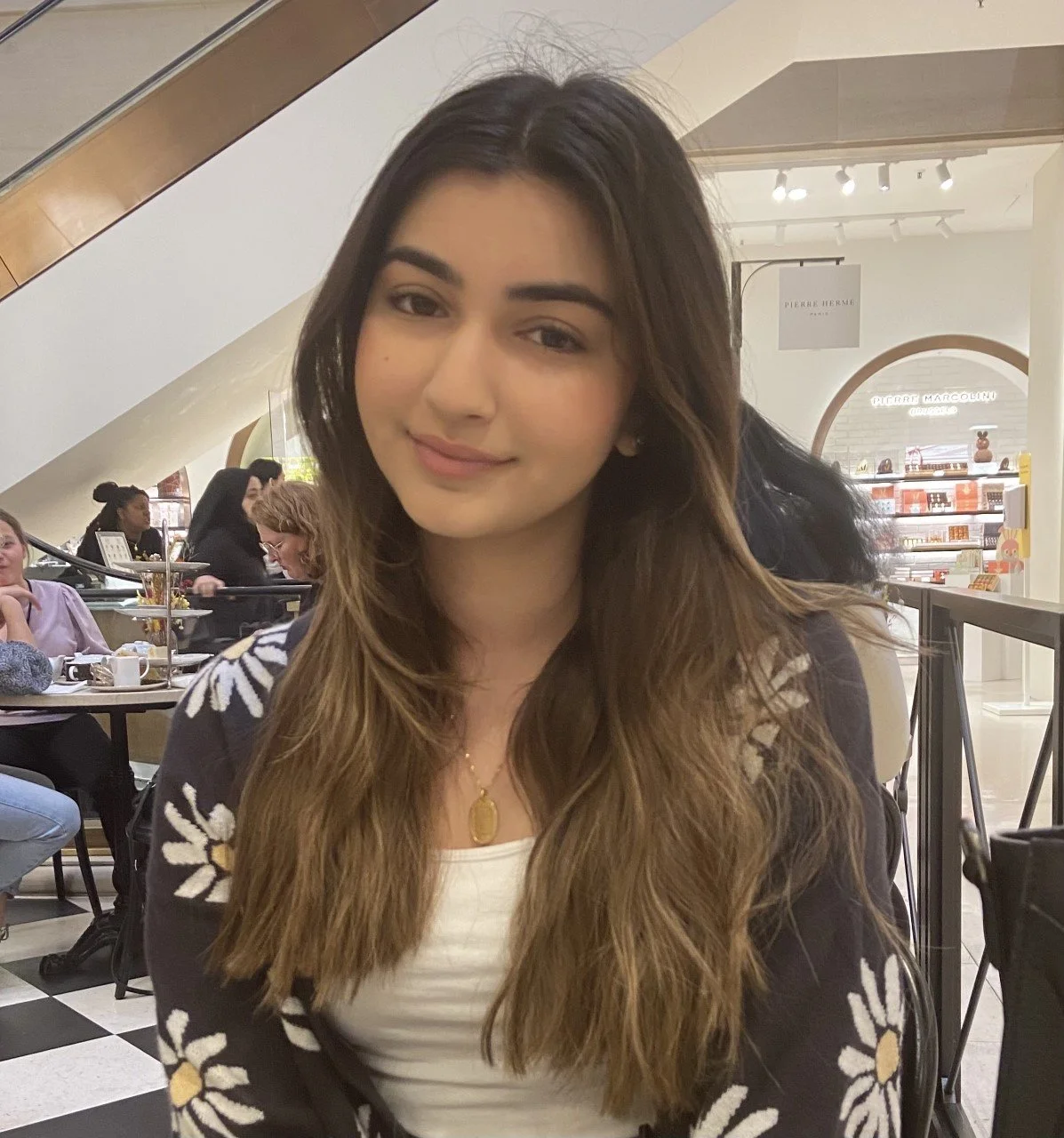
Amal is from Pakistan and is studying Digital Media Culture and Technology. She loves dogs and really enjoys astrology. She also loves to travel and enjoys old movies.
CARMEN: Could you start by telling us your name and what course you're studying?
AMAL: My name is Amal, and I'm studying the BA Digital Media and Technology course.
CARMEN: What is your essay about and what interested you in the topic?
AMAL: For my essay I've researched and discussed two social media platforms, Twitter and Facebook. I've highlighted how content moderation is influenced by established biases and social hierarchies, particularly race, ethnicity, political affiliations, and professional pursuits based on educational and class backgrounds. I think I took the most interest in the week that this course was taught, and I really liked what we were discussing, so that's why I chose to write about this topic compared to the others.
CARMEN: A massive part of writing an essay is the planning process; organizing what you're going to do beforehand before going ahead and writing it. For you, how do you go about planning, researching, and then drafting your writing?
AMAL: I like to be pretty structured when I'm writing an essay. The first thing I'll do is make a list of examples that I could use to answer potential questions and I spend a bit of time researching. I try to find sources that I can quote to back up my analysis and my opinion at first, then I like to make an essay plan, not all the time, but usually, I'll make an essay plan. Using subheadings sometimes helps me too. I plan out each section in bullet points and then I can add in paragraphs so it's all consistently making sense throughout the essay. I try to be pretty detailed, so I will usually finish the essay in a first draft if I'm sticking to the bullet points. This wasn't the case with this essay because I actually got an extension. When I'm having trouble with the word limit, I'll normally write a first draft, which is more or less than the limit, and then I'll remove or add an example of a case study just so I can complete it more accurately. Another thing I find to be helpful is writing down the essay question on a sticky note. While I'm writing, I'll stick it to the screen on my laptop so anytime I'm getting distracted or I'm losing my train of thought, I can go back to reading the question again and again.
CARMEN: You mentioned that sometimes you'll plan your essays, but sometimes you don't. Do you find that there's a major difference in the essay writing process when you do plan versus when you don't?
AMAL: Yes, for sure. The feedback I've gotten when I've written essays that aren't planned in my head or written down or anything, is that maybe the idea is there, but I'm not following up on my point. I might introduce a thought or an idea, but I don't write enough about it to explain it and execute it. However, when I plan it, I'm able to go over it again and again and again. So I'm looking at any potential mistakes or anything I'm missing out, and that way my essay probably flows together better, and somebody who maybe doesn't know much about the topic can read it and understand it better.
CARMEN: When it came to researching this essay, were there any particular articles or books that you found really useful?
AMAL: I don't love reading so much, so researching is always difficult for me, but I like to quote current newspaper articles because those are more accessible. When searching, they tend to come up first, and they're less dense when it comes to making my points in essays. However, to make sure that I'm defining the technical concepts, I usually go back to the sources that our lecturers give us in the presentations or in class, and I find those more helpful.
CARMEN: As you said earlier, for your essay, you had to focus on two different case studies; you looked at the Facebook's real name policy and then Twitter's de-platforming of Donald Trump. How did you go about choosing those case studies?
AMAL: As I said, I like to use more current affairs when it comes to putting examples into my essay. Due to the the nature of this degree, you have to be up to date with not popular culture, but just kind of what's going on.The first thing I recall when we were even discussing this in class and when I read the question was the de-platforming of Donald Trump on Twitter. Even though I'm not really a Twitter user as such, I remember it being such an important moment that I could immediately recall all the media coverage it got. While researching on the Donald Trump issue, I came across the Facebook example, which I didn't know prior to research. I figured that the two case studies were not relevant, but they could also be used together because the topic was interrelated.
CARMEN: What do you think made the Facebook case study stand out to you as a good example to use?
AMAL: I think it was a bit crazy to imagine that that was what was going on with Facebook's real name policy. It was something that I was never aware of, and I think when something is completely new to me that's exciting. If I don't know something that's happened and it's something talked about or something obvious, I find that very interesting. I think 'why did that happen? How did that happen?'. I couldn't believe what the policy was and when I kept researching and researching, I thought 'wow, I think that this has a lot to do with moderation that comes up on Facebook'.
CARMEN: With this essay, you cite quite a lot of sources, so it's evident that you've done quite a bit of research, but when you first come to university, citing is not easy, and referencing is not easy. Do you have any tips for how you manage to do that?
AMAL: Citing is really difficult, and I struggled with that as soon as I started my first year; I had lots of problems with it when I wrote my first few essays. Of course, my professors told me what I was doing wrong and I picked up on that. I remember one night I Googled exactly how I should be citing my work, and I watched a whole YouTube video about it. It was something I actually struggled with the most compared to people around me. I figured out that every argument I make has to have a citation alongside it to back it up, especially if it's statistical or factual. As I mentioned, I like to cite using newspaper articles instead of just strictly academic ones. Those are not just easier to read, but also easier to understand and I think that's what made it easy for me, but it was not something I was good at to begin with.
CARMEN: So citing essays was a little bit of a challenge for you, but were there any other challenges that you faced whilst writing this essay?
AMAL: I found the essay question a little difficult because the way it's worded isn't the same as if I was having a conversation with someone. I think that's the main difficulty I found. I was like 'okay, I know that this is from the week I studied this, but what am I supposed to talk about?' The only thing that made it easier was breaking it down into parts. Analyzing the keywords is the best way, even if you have to research the meanings of some words just to make it easier in your head. I could figure out definitions that I was struggling with and this allowed me to make connections. Making those connections meant that I was able to come up with examples from popular culture that I was already aware of.
CARMEN: You mentioned earlier that you got an extension with this essay. Could you speak a little bit about what that process was like for you?
AMAL: I have gotten a few extensions over my first year, and I think that this one particularly was because I felt that I was not writing my best. As I said, I don't always plan my essays and this was one of those essays. I chose the topic and we had a long time to write it, I think we had over a month and a half to do this. I was putting it off for a while, and then when it got to writing, I thought that it was not structured, and then every time I would reread it, I forgot what I was talking about. That's when I realized I needed an extension. I don't particularly feel guilty when I'm asking for an extension because I think that I'd rather submit something that makes sense to me and it makes sense to my professor. I want to be proud of something that I've submitted, and I'd rather do that than just submit something I have written quickly. After some time getting extensions and being confused I realised why essay planning is important.
CARMEN: With every single essay that you write, you gain something, whether it's learning something new or figuring out a new style of writing that works best for you. What do you feel like you gained from writing this essay?
AMAL: Over time, from writing many essays, I gained knowledge and the skills to cite properly. From this particular essay, I didn’t know anything about the Facebook real name policy and that came up when I was researching about Donald Trump’s Twitter de-platforming. I also feel that now I have a better grasp of technical aspects of the question, such as understanding how algorithms work and how biases feed into them. Upon research, I could see exactly how they manifest and as I was writing and discussing the case, this was a really interesting insight into digital media. That’s something I had no prior knowledge of and learnt throughout my research so I’d say that was the major thing I gained.
CARMEN: Finally, looking back at your first year, what would you say would be your key advice or your top tip for students starting out writing in the media arts department?
AMAL: I’d say my biggest piece of advice would be to take advantage of the reading material that we discuss in lecturers and also, the sources we don’t discuss. There are often many sources on our Moodle to look back at and I think that’s something we neglect because it was never discussed in person, but I found that reading them was really helpful and insightful. There’s so much more to what we’ve learnt in writing and that really helped me. The other thing is to not be afraid to reach out for help. I was very quick to to do that. Any questions I had I would always email my lecturer. Don’t be afraid to ask questions because, especially in first year, everybody is in the same boat, no one is ahead of you so the best thing you can do is not be shy, ask questions, and take advantage of the help that we have because that’s what it’s there for. I felt that my professors were very helpful in guiding me, not just when it came to writing but also how to prepare and how to go about reading academic texts which then in turn makes it easier to figure out how to structure and write essays in the department. Also, be particular to media arts. Writing essays generically is a bit different but they explain to you how to keep the relevance of the topic and the degree in your writing.