
Interview with Yona Schwalbe-Goodwin
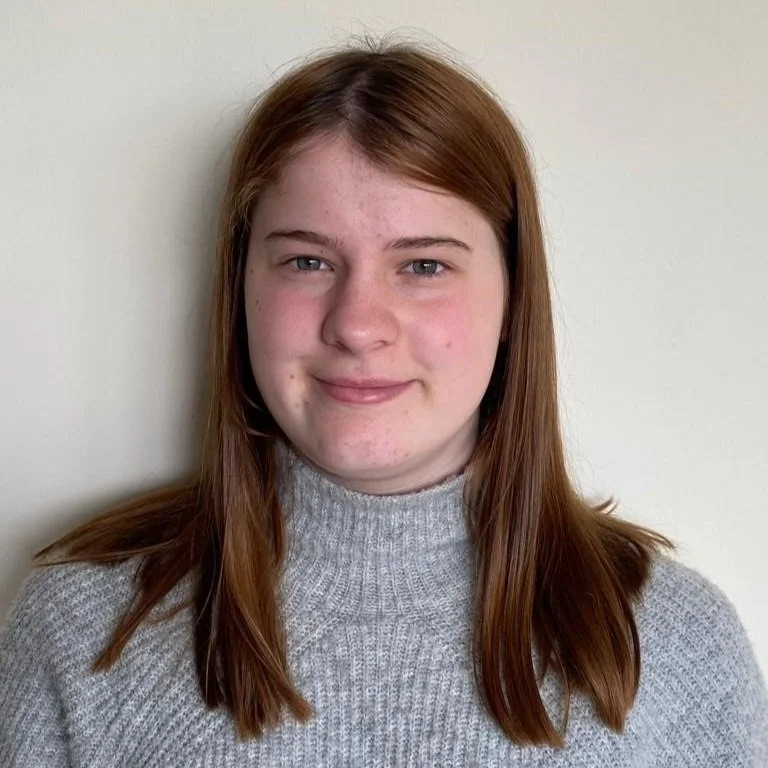
Yona is studying a BA in Music and Philosophy. Her main interests are in the history of music, Musicology and Ethnomusicology. She is particularly passionate about social justice, inclusivity and politics in relation to music.
SEB: For this interview I’m joined by music and philosophy undergraduate Yona talking about her essay on local music being adapted for global consumption. If you could start by telling us a bit about your piece and what interested you in this particular topic.
YONA: My piece is about the issues with adapting music with a local context for a global audience. I touch on appropriation and the issues surrounding that, and I use two case studies, one on Balkan beats, focusing on DJ Shantel, and one on Rolf Harris in relation to aboriginal music.
SEB: It’d be interesting to know how you went about planning, researching and drafting your essay, as with multiple case studies there’s a lot of moving parts.
YONA: I started with a couple of ideas I could remember off the top of my head from lectures, seminars, and loose notes, and then the reading lists. I knew already that I wanted to do something on DJ Shantel, as we talked about him a lot in lectures, but I wanted to focus a bit more on him. I needed something else, so I did some more research. I looked at music from the Andes and of the Shona people in Zimbabwe, but realised that I couldn’t find enough essays and articles on them, so in the end I decided on Rolf Harris. From there I wrote up my notes from the research and made a plan, and then wrote it from there.
SEB: You mentioned that DJ Shantel and Rolf Harris were your two case studies. What about those examples was so useful that you felt you could write enough about them?
YONA: There’s a lot of writing on DJ Shantel as he’s said quite a lot on the topic, and he was also featured on the reading list a few times. I’m not sure how I came across Rolf Harris - I hadn’t heard of him, but I remember putting in key words in the library search catalogue.
SEB: I think with writing anything in the PDA it’s going to be subjective - what was the main challenge you faced writing this essay?
YONA: One of the main challenges was how to write about Rolf Harris, as he’s a pretty awful guy. I wasn’t sure whether I should include him, so I ended up asking Henry Stobart, and he helped me a bit with that. I was nervous - I wanted to talk about the music but I didn’t want to put him in the essay without mentioning his convictions, so that was difficult to work around.
SEB: I suppose you’ve always got to look at separating the artist's work from the artist, that’s something I also cover in humanities. Did you look at any specific texts on separating the artist from their work aside from your case studies?
YONA: In one of my modules we talked about it, for example Robin Thicke and Blurred Lines. There’s material on a lot of reading lists, but I didn’t look at anything specific for this essay.
SEB: You talk about the library’s collection that you use, putting in key words to find resources and case studies - I’m interested to know how you went about finding your other resources, and how much you used the physical collection in the library as opposed to online articles and journals.
YONA: At the time I was at home and not in Egham, so I just used the online collection. For the majority of my essays I use the online catalogue rather than going into the library.
SEB: When you look back on the essay, what would you say is the main thing you’ve gained from it? Was there something that you learned about the topic that you didn’t know before, or was there something about structuring and styling the essay that was beneficial to you?
YONA: Structuring wasn’t a huge problem for me. What I learnt was how to write about people like Rolf Harris, interpreting the topic in a…not sure what the right word is for it.. a respectful way.
SEB: That’s obviously a massive challenge. What would be your main piece of advice for students starting out their writing in music?
YONA: I would say look at the reading lists, because there’s a lot of stuff to pick out. If you turn the texts into PDFs you can search for keywords and check whether or not it is useful, so it saves a lot of time.