
Interview with Saima Uddin
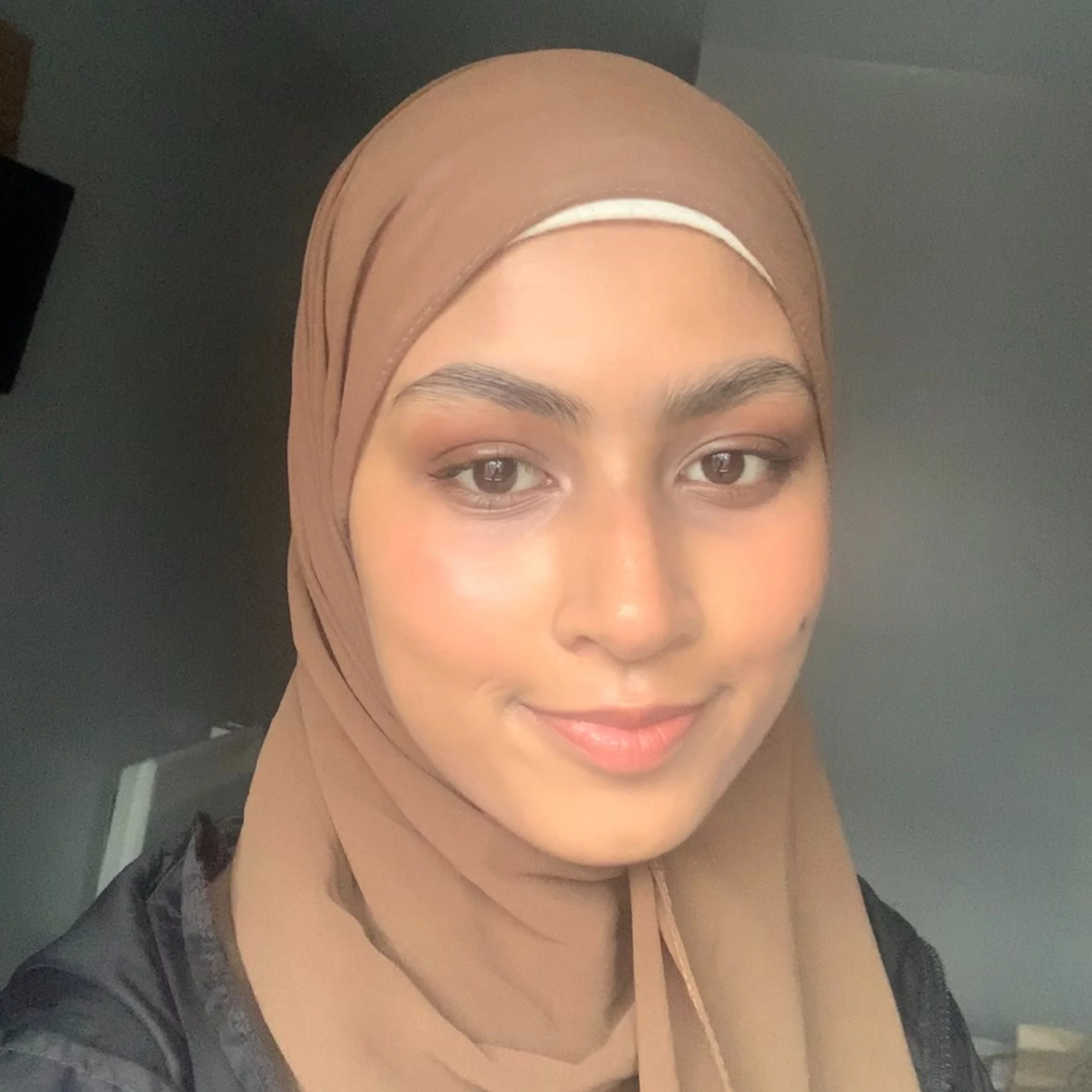
Saima is a second year Digital Media Culture student. She has a strong interest in web development, particularly user interface design and experience. In her first year, she enjoyed the Digital Media Practice module the most. She had the opportunity to build and design a web interface that resembled the desktop of a member of the hacktivist group, Anonymous. She also found her module on Digital Media Theory fascinating; it allowed her to explore the concept of the quantified self and the future of self-tracking using technology.
SEB: For this interview, I’m joined by Digital Media, Culture with Technology student Saima Uddin, talking about her piece on the quantified self. If you could start by telling us about your piece, and what interested you in the topic.
SAIMA: This piece I’m writing is about the quantified self, which looks at how we measure our personal health using data captured in digital forms, such as through our smartphones or smart watches. I found it interesting to research how we are beginning to approach a time where technology underpins and dictates vital elements of our lives such as physical and mental health.
SEB: This was a fascinating essay to read. It’d be interesting to know how you went about collecting the notes for this, and how you planned and drafted the main body of work.
SAIMA: Usually I start by taking notes on various topics and on any other previous resources that I’ve come across. I then go straight to the module reading list which forms the foundation of my writing, as they’re very specific to what I’m expected to include in the essay. I also use Google Scholar to find articles which can provide more detail on the topic. I use Royal Holloway’s library for physical copies I can access easily as well.
SEB: You mention the library’s collection - how did you use the physical collection compared to the digital collection in this essay?
SAIMA: The physical collection is useful for finding more detailed information relating to the topic I want to explore in my writing. By using the reading lists and resources on Moodle, I can find texts that relate to the module as a whole.
SEB: Within that, were there any particular articles or books that you found useful for this essay?
SAIMA: The articles in Wired magazine were a great help when writing this piece. This was because two of the editors at Wired were the people who coined the term “quantified self”, so it was insightful to see their theories and predictions behind this concept. The book ‘Gaming the Quantified Self’ by Jennifer Whiston was interesting to read as well, as it gave a great introduction to the topic.
SEB: Reading through this essay, I can see it’s really complex and layered. What were the main challenges for you writing this, and how did you overcome them?
SAIMA: One thing I struggled with while trying to write this piece was trying to find fluency between the topics I was exploring. To overcome this, I would often think ‘If someone who didn’t know the topic was reading this, what order would make the most sense to them?’ This has saved me from using terminology I haven’t defined first, or mentioning research I was yet to explore in my writing but that I’ve come across in my own time.
SEB: What have you gained from this essay? That could be something you learnt about the topic that you never knew before, or more a structural aspect.
SAIMA: Writing this piece has made me conscious of how much I rely on my smartphone, even for the smallest of things like writing down a thought. I’m now trying to detach from my phone a bit more and be present in the moment, to stop my phone being an extension of myself.
SEB: Out of curiosity, for note-taking, do you prefer taking down notes on pen and paper or digitally?
SAIMA: I would say it depends. For this piece, it’s easier to brainstorm a range of ideas digitally, and easier to collect when doing thorough research. Going digital this time was the best way, though I do like using pen and paper!
SEB: I just want to go back to the examples that you use - I was wondering where you found these. Obviously there’s a whole range of places you can get example cases - there’s the library’s resources, your own research, the extended reading lists.
SAIMA: I mainly relied on the reading lists provided by my lecturers, as they were the most in-depth and concise in terms of what I needed to include, especially as the piece of writing had to relate to three different areas - it was useful to have that reading list as it had a range of articles which were academic and non-academic. I found that articles, Youtube videos and TedTalks provided further insight into the topic as well.
SEB: It sounds like you get your research from a lot of places, we’ve talked about the library, reading lists, you mentioned Youtube videos - that’s a lot of formats coming into one. How do you collect your notes so that they’re organised when they’re coming from so many different places?
SAIMA: Typically, I use a table which is one or two pages under where I’m writing on the document - this helps to gather notes and points which I want to expand further on later, and it helps to maintain a good bibliography without forgetting anything.
SEB: From the moment you started writing the first draft to the end, what was the rough timespan after you had gone through the organisation and drafting process?
SAIMA: For this piece I would say it took two to three weeks, mainly because I prefer to have a relaxed pace when writing. I like to read my essay as I go also, just so I can see when there’s a lack of fluency.
SEB: Was this a question that was given to you, or was it one you select from a few?
SAIMA: This was one that I selected out of five, and I chose it because I was curious about the topic. I hadn’t given much regard to the concept of the quantified self and how we monitor our health using technology, but after taking it upon myself to research the topic, I found there is lots of discussion, as it has only recently been conceptualised. I also found that there was a wealth of academic theories along with non-academic resources, like the Youtube videos, so I thought it would be very interesting to write about this topic.
SEB: Even listening to you talk about it makes me realise how in-depth it is. Going from sixth-form to university can be quite daunting - what would be your main advice for students starting out with writing a piece like this?
SAIMA: The topics given for essays in first year were very interesting, and I would recommend that whatever question the students choose, they should let themselves explore beyond the requirements. In my experience, this is the only way I came across truly interesting research that I wanted to include. It helped me to write pieces that are compelling and show my genuine interest in the topic.