
Interview with Kate Horobin
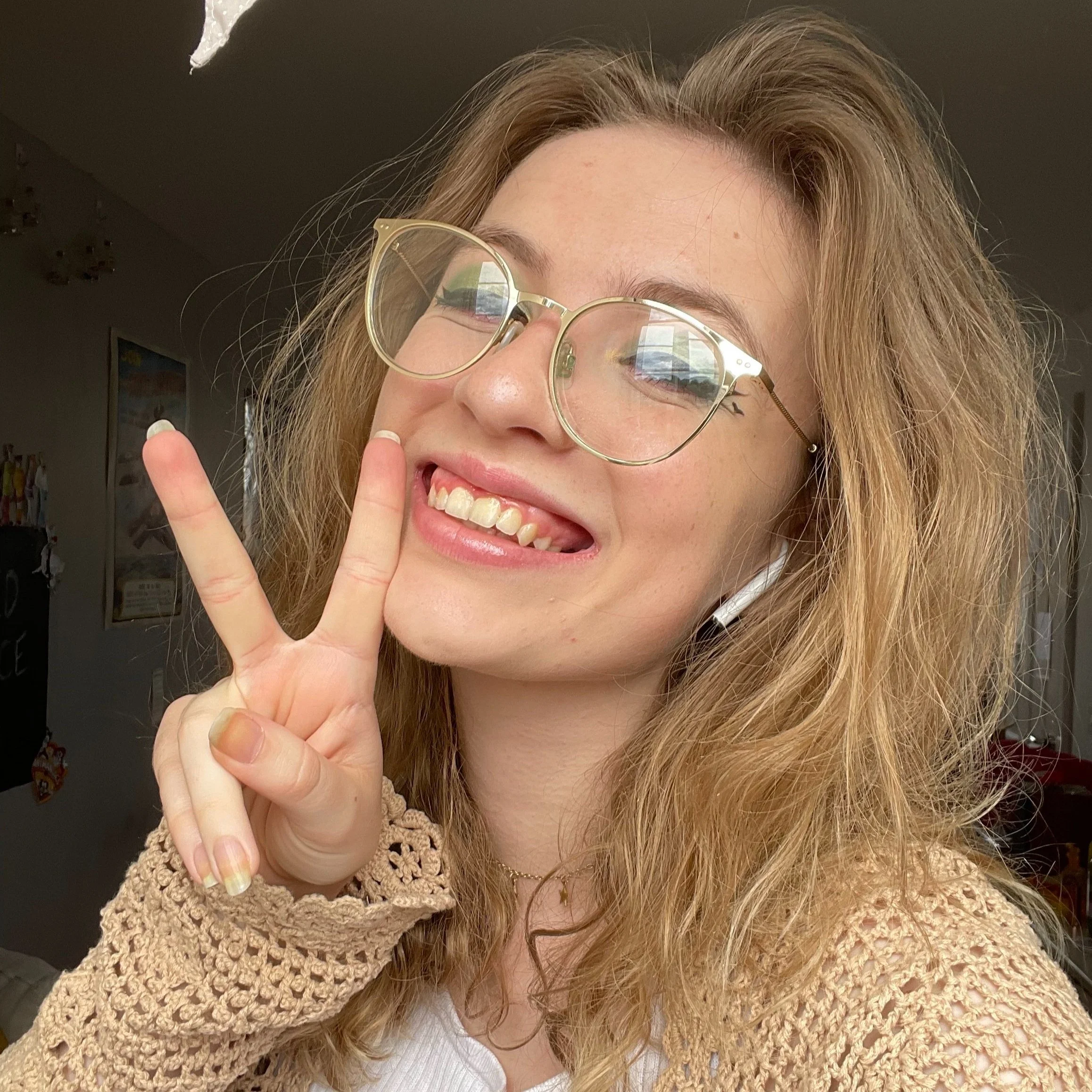
Kate is in second year and studying Music and Drama. She enjoys studying music debates and music performance, as well as performing improvised drama. Her main interests in music are about censorship and how music inspires future artists.
SEB: For this interview I'm joined by Music and Drama Student Kate Horobin, talking about her open book exam on violence in music. Could you tell us firstly a bit about your piece, and what interested you in the topic you wrote about?
KATE: I've always loved hearing other people's opinions and talking about my own opinions of music from a very young age. I've always asked questions about what other people think and usually argued with them about it, because I always thought my opinion was right. Violence in music has always struck me as something really interesting. In my life, music has always brought me a lot of peace and a lot of joy and happiness, so I was confused going into it as to how it could be used in such a violent way. Looking into it and actually researching the piece and writing it, it was really eye-opening as to the different ways that a lot of nonviolent music can be used in violent ways, causing damage and upsetting people. I mainly focused on the use of music as a torture weapon in the Iraq war, and how it was used to get information out of captured soldiers. I touch on the argument of censoring certain music, and if that's even possible with the amount of ways that it's being streamed now, and even if artists should censor their music because it is a form of free speech, and artists should be able to write about whatever they want to. That's the gist of what I was writing about.
SEB: That's really interesting. As you mentioned, music generally brings peace and relaxation, so it's interesting to look at it from the other side. You use quite a lot of case studies and examples in this piece that are really interesting to read, so obviously there's a lot of moving parts within it. For an open book exam, I'd be interested to know how much time you spend planning this in comparison to actually writing the final body of work.
KATE: I cannot stress enough how important planning was for me. I remember in high school I was being told off by my teachers because I would find myself having so much to write about. I was making five, six, or seven points in my essays, but none of them were really in depth, and none of them were really that structured well, and I was told that I didn't need to talk about that much. You can trim it down, and have three or four really detailed and well-written points that will get the same amount of information across. It looks a lot nicer, and it reads better. The other danger that I think you can encounter with the 23-hour open book exam is you think you’ve got all this time, you can spend ages planning it, and then you can just write it at the end. However, you’ll come across the reality of over-planning, and that'll make it seem more manufactured and not as genuine when you're writing it. I would say that I spent maybe, for one question, around an hour and a half looking through examples, taking my quotes out that I wanted, and looking through the information online. Once I had all of that, I thought, what points am I interested in, and what do I feel like I can write a lot about? After the research, I would figure out which points would be the most successful to write about, and how I could link them together seamlessly. In Contemporary Debates, you have to remember to touch on the counter argument, because it's supposed to be a debate. You can't just write about your opinion, you have to touch on the counterargument, as well, so I spent maybe an hour and a half planning, and then I probably took another hour to write it.
SEB: That's really interesting to hear, I think it’s easy to go into it and imagine that you’re not going to have enough to write about, as there's so many resources available. When you began planning for this exam I can imagine that you had a lot of resources ready, but were there any pieces you knew you were going to use right away?
KATE: The bulk of the question that I had was focused on the Iraq war. I found a lot of articles that were first-person perspectives on soldiers that had been in the war, whose experience was so much more valuable than that of someone who had an outside perspective. It's so much more personal and more emotional reading it from a first-person perspective. I used Thierry Cote's article about musicians and their songs as threats to national security, as it really delves into how popular music has an emotional and effective power, and how such a power can be used to create good or evil. I thought that was a really interesting view on it because I'd only ever seen it used for good, so when it’s put into words like that it really opens your mind to how it could be used negatively. I used work by Spencer Kornhaber as well, when I then went into the counter argument later on. He has an article about getting hate speech off music streaming services, talking about how it would almost be impossible to. Music is everywhere. It's impossible to escape music nowadays, especially with the developments in technology, and the question on whether certain music should be taken away is difficult in itself, because it is so subjective. What one person finds offensive in music might be completely fine to a different person. I think those two were probably the ones that I got the most out of.
SEB: I think that that's a really interesting point that you mentioned about music being so subjective. Would you say interpreting freedom of speech and diverse opinions was one of the biggest challenges to get around in this exam?
KATE: It was definitely a difficult thing to get my head around. You have to remove your own opinion if it's really strong in a question like this because it just completely makes it biased and one-sided. When you're writing about a debate you have to consider both sides, otherwise it wouldn't be a debate at all. I do find myself being quite opinionated, especially about free speech in music. It’s important to look outside of yourself, for example about the music children today have access to, music that I didn’t have access to when I was younger, that could be considered offensive. With all these streaming services, they are going to come across music that is inappropriate for kids their age, so I had to think about that. With children having so much more access to that nowadays, I can understand why parents would want it to be censored for them, and why they would want certain rules to be in place. On the other hand, you have to think about the artists. People are allowed to write about whatever they want nowadays, and although extreme and hateful themes are being written about in music, it's quite harsh to say that all artists who are given this platform to say what they like are not allowed to have adult themes in their songs. So I had to really sit down and think about the different perspectives that are going on in this argument, because it completely changed the way that I talked about it.
SEB: That's a great point. Obviously you're tempted to argue from your point of view, but you have to show that counter argument as well, which must be a hard thing to do given how subjective the argument is. Was there something that you learned while you were writing this that was beneficial to your understanding of how an essay should be structured?
KATE: There was a little bit of both, I think. You have to put into place the lesson you’ve been taught about structuring an essay, which is beneficial now, but in high school you don’t like to be told what to do! I used to think that putting in as much information as possible was great, but essays like this require you to narrow down the points you have into three or four really detailed and well-structured points. It makes for a more cohesive answer, and it reads so much better if you’ve got less information to process in there. The most interesting thing I learned was through the research, about how music was used in the Iraq war, to get information out of prisoners. When you look at the sensory deprivation that a lot of the prisoners were put through, you can understand how this would affect their mental state, and it was interesting to put this into a debate.
SEB: Even listening to you talk about it now makes me realize how many layers there are - it sounds like there’s the benefit of the personal knowledge that you gain from the research, and the benefit of learning how to structure that into a coherent argument. As you look back on your first year, what would be your main piece of advice for students writing in music?
KATE: I would say my number one thing would be to take everything one step at a time. I had a point in my first term where I looked at everything that I had to do and I got really overwhelmed, because I didn't think I'd have time to do it all, and yes, they do throw a lot at you in your first year, because they want to make sure that you can deal with it. It was a big step for me, going from sixth form to university, but if you take everything one week at a time, and really plan everything as you get it, as opposed to leaving stuff last minute, it really does help. As for Contemporary Debates, I can’t recommend the module enough. It was really interesting to learn about both sides of the argument on a lot of different topics, such as music and violence and music and privilege. But as with anything, make sure you plan ahead and really understand the style you need to write in.