
Interview with Lydia Callomon
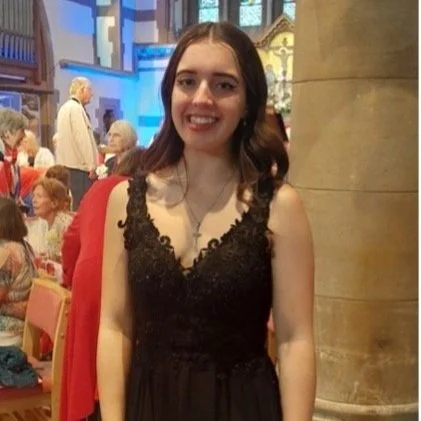
Lydia is a second year student taking a BMus degree. She is an Orchestral Scholar and plays as a violinist in the Symphonic Orchestra. She wrote this essay as an assignment set for a first year solo performance module allowing her to reflect on performance practice from an academic perspective. She has gained confidence in both her writing and performing skills through this assignment and will continue to build on these skills through future assignments.
SEB: For this interview, I’m joined by Music student Lydia Callomon, talking about her reflection essay for Solo Performance. If you could start by telling us a bit about this piece.
LYDIA: This reflection is a piece of coursework I had to write for my Solo Performance module. It included my programme rationale, where I had to write about my history as a performer, as a violinist, and about how I would tackle my plans and ambitions as a performer.
SEB: This is different from other essays that many first years will write - having it split down into three reflective sections is quite unique. How did you go about planning and drafting that?
LYDIA: I found having a template for this format to be useful. It’s quite different from a regular university essay as it’s quite personalised, looking at you as a performer and your plans on how you’re going to improve. When I got this template, I thought about three or four key bullet points that I needed to get across in each paragraph to make sure I didn’t miss out any key information. It also helped to look at myself as a performer from an essay format, to see what I needed to do to improve.
SEB: This essay is reflective of yourself, and in music there are times where you have to criticise other people’s playing as well. What are the differences in criticising your own playing and in writing about someone else’s?
LYDIA: I found it easier to criticise myself as it’s easier to find things you don’t like about your own playing. On a more positive side of it, this essay gave me the opportunity to write about these issues in a reflective way, to see how I could improve on them. It opened up my mind to realise the mistakes in my own playing and how they could be fixed.
SEB: That sounds like a very unique challenge for this essay. What were the other challenges for writing this essay, and how did you overcome them?
LYDIA: My biggest challenge was trying to write it in a professional way, trying to convey the issues I know myself to someone who doesn’t necessarily know the technicalities of the violin, or understand how hard it is to overcome those challenges.
SEB: On the other side of that, what would you say you’ve gained from this essay - is it something that you’ve learned about your own playing, or something more structural that was beneficial to you?
LYDIA: This has been good practise for my confidence in evaluating myself as a performer, and with structuring essays as well - it’s given me the opportunity to practise my fluency as a writer, as well as shining light on the aspects of my practical playing that I need to improve on.
SEB: It’s interesting to think about. Are these comments you make on yourself things you think of during rehearsals and performances, or are they things you only collect together when you’re planning and writing this essay?
LYDIA: A lot of what I write about was definitely from the lessons I’ve had with my teacher. Right at the beginning of the term, we were already talking about bow technique and how that was going to affect my playing. I wasn’t thinking how they actually helped me at the time, as I already understood how they were going to help my playing, and realised that when I was recapping them in this piece. I was subconsciously trying to put these notes into my playing afterwards.
SEB: When you look back at your first year of writing reflective pieces, what would be your main advice for students who are starting out with essays like this?
LYDIA: My biggest piece of advice would be to have these thoughts while you’re practising, and to think about how you could put it into prose. With essays in general, I would start reading academic journals and articles straight away, and take interest in as many texts as you can, as something may appear in a text that’s not directly related to your topic but could inspire a large part of the piece. Pay attention to what you’re reading, and even think about how it could help you in other modules.
SEB: As I said, this piece is unique - it blends together academic writing but also relies on the performance aspect as well, and your standard in that. I know you’re a fantastic violinist - what would be your advice for someone starting out in the orchestra next year?
LYDIA: Go for it! That was the biggest thing I didn’t do last year. I was terrified, but you should enjoy it. Practise is essential, and I for one didn’t practise orchestra repertoire a lot for uni, but after my first year, it’s definitely a nice break from practising your Solo Performance pieces. It’s equally beneficial to practise ensemble pieces, but it’s a great way to enjoy music away from the degree.