
Interview with Dick McCaw, Department of Drama, Theatre and Dance
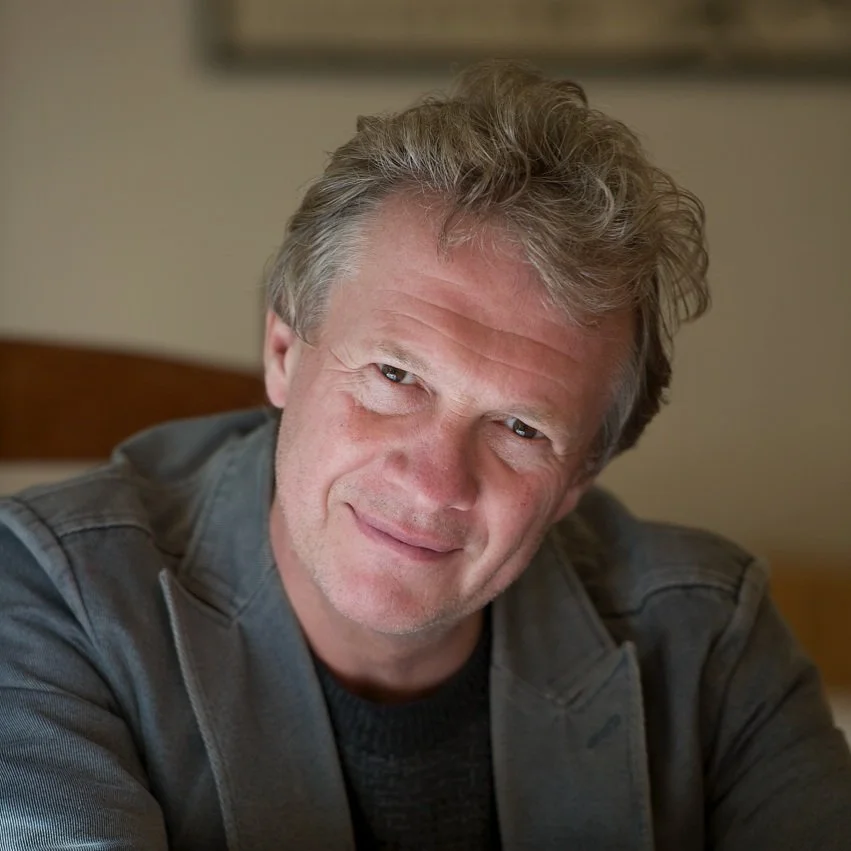
Dick McCaw began his career in professional theatre, co-founding The Actor’s Touring Company in 1979 and The Medieval Players in 1981. He was Artistic Director of the International Workshop Festival from 1993 – 2001 after which he began a period of re-training, gaining a PhD in 2003, and qualifying as a Feldenkrais practitioner in 2004. He became a staff member of RHUL in 2007, has edited three books (all on the work and legacy of Rudolf Laban), and authored three books, two on the Actor’s Body, the other on Mikhail Bakhtin. He is a Tai Chi instructor.
In our chat with Dick, we discuss his experiences writing the recommended text for first-year Drama students, Training the Actor’s Body: A Guide. You can read his book here.
CARMEN: Could you start by telling us a little bit about yourself and an overview of your work?
DICK: I’m Dick McCaw and I am a Reader in performance training, although, I got into academia very, very late. My career started at the Edinburgh Festival in 1978 when we won a Fringe First. On the back of that success, I created a theatre company with John Retallack called the Actors Touring Company which still exists. I previously had some experience working with an amateur group at college. Once I started a professional theatre company, I then realized I couldn't be with the one I was with, I needed to be with the one that I was working with earlier. It was more rock and roll, it was more the kind of theatre that I would've gone to see. We then became one of the biggest touring theatre companies around. I mean, the phrase ‘touring theatre’ probably doesn't mean much now because it hardly exists, but in the eighties and nineties it was one of the main means by which radical ideas and aesthetics were shared with audiences around the country. It wasn't just a metropolitan thing, we'd go to village halls too.
I then went into the International Workshop Festival as associate director. The director left for Australia, and I was the only person who knew how it worked so I was asked if I would I take it on. So I started with the International Workshop which is what it says on the tin. It was a festival consisting of workshops given by international experts and if we are talking as we will be doing soon about training, that was my training ground. That was where I had the means of raising money because we were a charity and had a reputation. We raised about a quarter of a million pounds a year, which meant I could get quite astonishing teachers in from across the world across the different art forms. It was sort of a cross art form. It was never a Shakespearean drama, or ballet. You know with that physical theatre question of is physical theatre dance theatre, or is it physical theatre? To be honest with you, who cares? It’s that thing that those people do and that interests me a lot.
I think it was about my eighth year in when I suddenly realized that I wanted to do this myself. I wanted to be a teacher. So, I thought ‘I will get a PhD’. The PhD turned out to be my third book. It wasn't so academic, to be honest. I had a passion for this man called Mikhail Bakhtin for ideas around Russian theater. So as I say, I did a PhD and thought it would get me into university. However, one of my workshop festival teachers said “I've got cancer and I can't teach this course. You will.” I said “I'm in Iceland for the first two weeks.” She told me “I've signed you up. I'll take the first two weeks then you're on your own.” I said, “I’m not ready” and she said “none of us are ever ready to teach.” Even now thinking about the term ahead and with something like 22 years teaching experience, I still feel frightened by the challenge because teaching is not about me delivering what I know to you like ‘here's a bunch of tissues.’ It's not like that. It's a negotiation with what you have and what I have and together, we can create an understanding.
CARMEN: We are going to be looking very specifically at the guide that you wrote: ‘Training an Actor’s Body.’ The first thing we'd love to know is what the inspiration was behind that?
DICK: Mostly my first years. I write very little in preparation for the practical element of a class. The talks are different, I script these because otherwise I would wander off! However, the practical element might be as small as five or six lines. My notes after the class might be as long as five pages, my students will tell you! Essentially, as I say, I don't know what's going to happen in a class. That's why it's frightening. That's why it's a challenge. I don't know whether this exercise which has worked in the past will work now. So I write the student's notes, not so much a log of what has happened, but of what I've learned, what has transpired as a result of our meeting.
Those notes accumulated over the years. I won't really talk about inspiration, instead I would maybe say, where did the material come from? The inspiration to teach is that I love it. It’s just quite as simple as that. I didn't realize I could teach. I could communicate, but I didn't realize I could teach, but I absolutely adore it. The material however came from my notes.
With everything you do in a class, it's a, maybe, it's a hunch. It's a ‘I wonder if this will work’. You're always trying to match what's going to run with a particular group and the notes were ‘this worked, we gave that up’ etc. It’s about a kind of a pedagogy on the hoof. I write about practice, which is very hard. I mean, I couldn't describe how I ride a bicycle, how I swim. You’ve probably heard that we throw and catch sticks in class, and I also have a workshop in which we do it, where the participants have taken the work very, very far. However, if you asked us how we do it, especially when it gets complex, I'm not sure we could come up with any simple answer. So it's a form of knowledge that I'm trying to articulate.
SEB: We were also wondering, what was your primary aim when you were writing and publishing this book? What did you want to achieve when you were writing it?
DICK: I think when you write a book, on the one hand, it's a certain type of consolidation of thoughts or practices that you've had over a period of time and maybe you feel you're ready to share them with other people. I have had some nice feedback from students!
I think the other thing is, who do you write a book for now? I find a lot of academics write books for other academics. With the two actor’s body books they're certainly not written for other academics. They're written for students or anybody who is interested in questions of practice. I certainly didn't write the book to make hundreds of thousands of pounds because it sells by the dozens rather than the hundreds. However, I think it’s something about getting your ideas out there and contributing to a general conversation about what is it that we do and asking how does it work? I mean, I will never ever understand how theatre works. It’s impossible, but if I ever did, I would stop immediately and go back to gardening or playing the guitar or something. I think I just wanted to share ideas really.
CARMEN: I mean, having read the book, I find it quite interesting that in the conclusion you explain that the ideas in the book you struggled to make sense of, and that it was only through that struggle and writing the book that the ideas became clear to you; I find that quite an interesting concept! Could you explain how that process worked?
DICK: Well, about three years ago, I was talking with one of my first years whom I have immense affection for, she was very, very clever. We were talking about one passage about movement qualities, and she said, “there's not very much on Michael Chekhov here is there?” I said “no, you're right” and there should have been. So to think that that struggle is over, to think that I've got it right, is not the case. So although I wanted to get my ideas out there, if that gave the impression that that is my thinking and that the process that you just referred to has stopped, it hasn't. I mean, the struggle is not simply in the difficulty of explaining how you ride a bicycle. In other words, you've heard of tacit knowledge. What you know, but you don't know sometimes that you know, and even if you do know that you know, you don't know how to say it. I can do it for you, I can ride my bicycle and say “there, I can ride it, enough already,” but to say how I can do it is difficult.
I've also not stopped reading or thinking; I read in the field of neuroscience, I read other practitioners. Also, the other ideas in it and the other practices in it are pedagogical. I mean, these are just forms of negotiation, be they the ideas, or be they the practices, they’re forms of negotiation and as you get more practiced, your forms change slightly. Maybe I'm getting simpler. I really hope I am! In both the practices and the ideas. But I have this furnace of crucible of ideas and practices in this student workshop - which you're more than welcome to join, it’s on Friday evenings - and stuff comes out from what we do there. That goes straight into the classes because there I have first, second and third years in a more free environment playing around with some of the things. They’ll say, “but isn't this a…” and you think ‘oh God, why didn't I think of that? Of course it is.’ So it's a dialogue and a struggle and an ongoing one.
SEB: So, when you first started teaching and writing in academia did you ever think that you would ever come to publish something of this nature, kind of written in this style?
DICK: I never thought I'd be a writer full stop, but everybody now thinks of me as a writer, because I've got something like six books under my belt and one which goes to the publisher today or tomorrow! I don't ever think I wanted to be a writer. However, I like the distinction you make between the two actor’s body books and the other stuff, because they are slightly different books in as much as they are very direct inquiries into questions of practice. I think they've informed everything I'll do in future. I want to try and avoid some of the over theorized academic material that I see. I really do want to write in as simple and as accessible a way as possible and I had to for the body books. It was like I was talking to you now because you’re students whom I could find in one of my summer workshops or the Friday workshop, and I think you would find the same type of critical inquiry that I'm sharing with you now that I would do in class. It’s just a way of trying to discuss something that's really hard. It comes back to that earlier question about process - the actor's body books are about a certain process. I never thought that my notes would amount to a book. I was drawing on about 600 pages of notes and of course there was some repetition but that's the nature of those two books within the rest of the stuff that I do.
CARMEN: I mean, I think that's really interesting to know that you never really saw yourself being a writer, because as you said, I think a lot of people do consider you a writer. In one of our student interviews with Selena Jolley, who was one of your students, she brings up your writing a lot and kind of mentions how she utilizes it in her essay and how helpful it was, so it's interesting to know that that was never part of the plan for you.
DICK: No, there was never a plan. I mean, as to publishing my PhD thesis, which now is sort of common practice, I refused. It wasn't what I wanted it to be. Actually, a doctoral thesis is written to satisfy certain criteria, it's an examination, you know. But no, I never really thought of that.
You bring up Selena, who's also part of the workshop. One of the challenges in teaching is you don't know what your students know. She is - and I hope she doesn't dwell on this too much - something of a genius. She really gets the work and it’s so humbling. It’s almost a bit frightening when you read an essay by a student who's got your work and you think, have I done enough to support them? I hope so because the joy of teaching, actually, is that sense that you don't know the potential of these people in front of you. You don't know the possible futures you have for these ideas and practices.
SEB: How would you say that your writing style has changed in terms of style and writer's voice since you've been writing and teaching?
DICK: When I wrote the Bakhtin book, which I think came out in 2016, I knew already that I wanted to avoid using theory as bling, to avoid using theory as the decoration or ornament of prose where it doesn't have a direct function. So, if I use theory, it's mostly neuroscience or certain types of philosophy, which ask really interesting questions. Questions for theatre practitioners are, how do we breathe? How does breathing affect mood? What is mood? How can we calm down? How can we be ready? And I know it sounds almost religious, but how can we be present? And I don't think it is religious at all, by the way. So I'm guided in my writing evermore by a search for the ideas and metaphors and analogies and sorts of knowledge that can give form to and elucidate problems of theatre.
I know it's not very postmodern to talk about character, but all of us watch television and mostly it's character driven and narrative driven. I mean, I don't help people create narrative works when I'm teaching, or even when I'm working with people in a professional capacity, but I still adore a good character driven drama that gets to the very essence of what is it to be a human. I think so many people could benefit in everyday life from much of what we do in our performer training. They’d be able to breathe more effectively. They'd be able to communicate more effectively. They'd be able to listen more effectively, which is such a huge problem. They would be able to attend more successfully.
Anne Bogart, her writing is so beautifully clear. I'm just reading the last of her books and I just adore it. So if my writing's changing, it's one for ever greater simplicity and to-the-pointness.
CARMEN: What I've always enjoyed about your writing is that it’s very easy to grasp in the sense that it's written in a style where I feel like I can understand it, which when it comes to academic writing is of course not always the case. It’s very refreshing to, especially as a first year and as a fresher, be able to read a piece of academic writing and think ‘okay, I understand this’. It makes me feel like I know what I'm doing so that was lovely coming into first year!
DICK: That's so lovely to hear because that's exactly what I'm aiming for. I do Tai Chi every morning and this guy had just been watching me and he said “that was just so flowing” which is exactly what you aim for. Maybe that sense of ease and flow is also what I want in the writing.
CARMEN: As someone who has been in academia for a while, what do you kind of wish you had known at the start of your studies that you know now and within that, what advice would you give to undergraduates?
DICK: I mean, you learn through doing so at the end of it, you think to yourself, ‘oh, I wish I'd known that’, but to be honest with you, you are you, I'm me. I make my mistakes in my way, you'll make your mistakes in your way. When I was in the workshop festival and I participated in workshops, I didn't flit about. I would do a whole week's workshop, but across all the workshops, if I'd been given a pound for the use of one word, I'd be a millionaire, and that word was listen. I think it's really hard. I mean, my lab teacher, Geraldine Stevenson, she'd said “go to where your students are”. That's a really subtle thing to say but it goes back to the very beginning of this conversation where I was saying I'm frightened, but you've got to cross that space. I mean, you can be an arrogant teacher and you can just show off everything, you know? Out of the 200 or so teachers, I had two who were like that, and they weren't frightened of course, because it was just narcissism for them.
Another piece of advice, and it seems so silly, but it's breathe and specifically breathe out. If you have a class in front of you, odds are they want to learn from you. They're not actually opponents. They're not actually the enemy, so you don't need to shout. You just need to do enough to be able to let them come towards you and then a negotiation can start taking place. It won’t work if you do shouty stuff and you've got your lesson plan, like it's some kind of armor to protect you against them. It should be a catch net.
I mean, each class is an ecology. It's a unique system of moods of that day. Just as if when you are playing on stage and there's a mood of the performance and you are totally out of tune with that – it’s the same thing with teaching. It’s tuning in and thinking, I know what they need today, I know what you need today. If you're really sensitive, you'll probably get it right.
I described in the book ‘Training the Actor’s Body’ that maybe if I had to use one word as the aim of that training, that word would be sensitivity and it's not just becoming sensitive to yourself, it's becoming sensitive to what's in the room. Maybe somebody's mothers died and there's just a whole friendship group that is a little bit down. Now, if you are playing Mr. Jolly and what have you, you're probably not playing the right mood. Maybe a little bit more sensitivity to that particular mood would help people learn that day in that situation.
I don't know what would've been more helpful when I started because that is 20 20 hindsight, but any advice would be have a plan, but it's not rigid. It's just stuff you could do. However, if something's happening, if Carmen suddenly goes off on one, on one of the exercises and is doing really interesting stuff, but you are coming to the end of the 10 minutes allotted for that exercise, if you cut Carmen off, you are a bad teacher. Because, you'll be exploring some type of theme or answering some type of question in that particular lesson and Carmen's realization, which is manifested in the improvised way she's doing this exercise, where she's taking it, how she's taking it on for herself, that's a really important process that you need to nurture. Maybe just come over and say “Carmen, we're going to continue, just keep on developing, but know that I'm going to be asking people to join in and to try and pick up on what it is you've picked up on.” I build on what's growing in the space and time of the class. Now that's quite a skill, but all it means is don't cut it at 10 minutes because you've given 10 minutes for that exercise. It’s not a train timeline.