
Interview with Henry Stobart, Department of Music
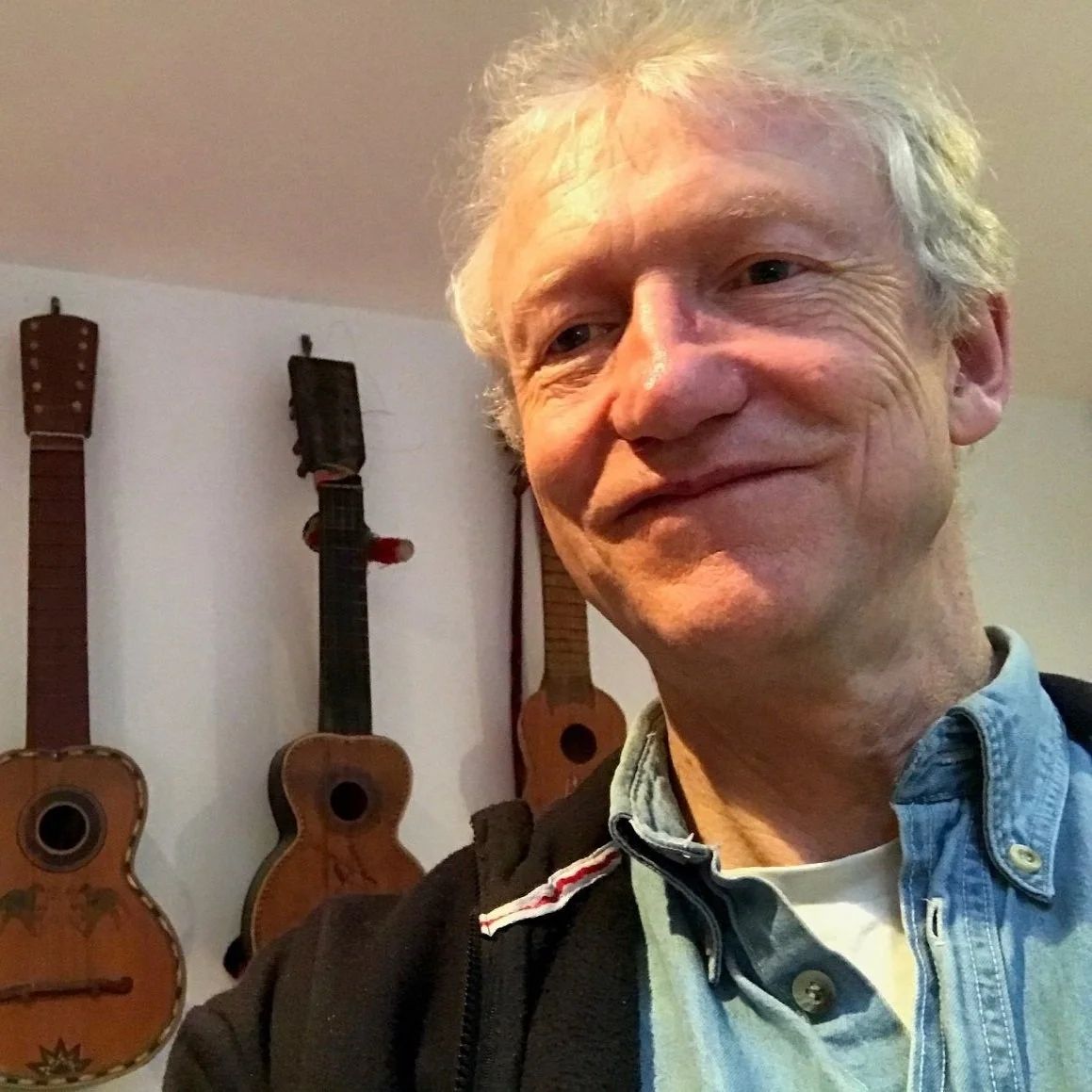
Henry Stobart joined Royal Holloway’s Music Department in September 1999 and was the first lecturer to specialise in music from beyond the western classical tradition – which he enjoys too. His main research area is indigenous music of the Bolivian Andes, where he has made a huge collection of instruments which he plays with Royal Holloway’s student Andean band. He’s also passionate about teaching, playing and learning about music from many other parts of the world and eras.
In our chat with Henry, we discuss his first published piece Flourishing Horns and Enchanted Tubers: Music and Potatoes in Highland Bolivia. You can read it here.
SEB: For this interview, we’re joined by Henry Stobart, Reader in Ethnomusicology at Royal Holloway. If you could start by telling us a bit about yourself and your work, and what inspired you to write Flourishing Horns and Enchanted Tubers.
HENRY: I’ve been a lecturer at Royal Holloway for over twenty years now, and I specialise in teaching different forms of music from around the world, and that’s what originally got me into academia. I should say that I didn’t actually do an undergraduate degree - I was a player at a conservatoire originally, specialising in both the tuba, an instrument which is not that old, and the recorder, where most of the music tends to be very old. I worked for quite a few years as a teacher before going to South America and getting interested in research, so I actually came to academia quite late - I didn’t go to university until I was thirty. I haven’t followed the course of most undergraduates, and I haven’t taken an undergraduate course in my life - though most of my students don’t seem to mind that! I turned to academia because I found the material so interesting, and in a way that’s how I got into writing this article.
I’d been living in the Andes for a year, doing work with some of the indigenous people there, and found that really inspiring. It really changed my views about the world and my own place in it. I was then fortunate enough to have the funding to undertake a PhD. During this time, I went to Bolivia, living in a community of Quechua speakers (language of the Incas). It was a monolingual community, and what I was interested in was the music they made. They weren’t a community that were famous for their musicians, and what was really striking to me was that they played all these different instruments through the course of the year - there was one for bringing the rain to help their crops grow, another to send away the clouds, another to bring cold weather. I kept asking people questions about music, and they kept changing the subject, getting back onto agriculture. When I asked them about music, they assumed I was talking about brass bands, not their music, as there isn’t a single word in the Quechua language that refers to it.
By the time I’d spent the first year there, I was fascinated, and I realised that music was completely caught up with the agricultural activities, particularly growing potatoes, their main crop. I spent a lot of time helping in the fields, weeding and harvesting them, and gradually I came to realise how close music was linked to agriculture. I come from a farming family here in the UK, but farming doesn’t link to music at all here, and certainly not to the mundane potato. That’s one of the reasons that I thought that an article on this would be fun, and it would also be one that would make people stop and think about what music really is.
When I was a kid, I used to play the tuba, and my brother used to play the horn, hence the title, and hence why I dedicated this article to my brother. It’s about potatoes, but about me as well, and my own engagement with music from a young age - that’s a hidden part that doesn’t usually come out.
CARMEN: What was the research process like for this article? Of course, a lot came from your own experience, but did the process differ from anything you’d written before?
HENRY: This is the first proper academic article that I've ever written. That was in 1994, but I still quite like it, as it’s a good piece to get undergraduates thinking about music. I still give it to my students to read. I was in the middle of my PhD when I was doing it, so it was a bit experimental. I found writing really hard at the time - the most difficult bit for me was getting all my ideas in a logical order, and thinking about how to tell a story and draw people in. I also read and referred to work from other scholars that I thought were very relevant at the time, and I found things in common with my idea. A lot of this is based on original research, but I also relate it to the other readings I was doing for my PhD. If I wrote it again today, I’d probably draw on a lot of different literature, I might be talking about things like ecomusicology, which everyone’s talking about today.
I still find writing really challenging. I find that doing enough research helps me to see the discussion other scholars are having about the topic. It’s important to do enough before you get started. A nice way to think about it is like detective work, where you have to search and find out what’s exciting to write about for your essay. Sometimes I get wracked with self-doubt, so it doesn’t always come easy. Even if I write several things that people like, it doesn’t make it easier the next time around. It was a hard process! I often have the conception that some people write really easily, though a lot of people I know in academia also have issues with getting their ideas together as well. I’m thinking about my own undergraduates here - it’s important to think about it from the perspective of the reader.
SEB: You mentioned that this was a piece written early on in your career. How would you say that your professional writing style has changed since then?
HENRY: I’d say that some of my later writing, especially my collaborative writing, is a bit harder to read, ironically, though I would much prefer my writing to be accessible to everyone. I’m in the process of writing a book now, and I’m determined that my friends who are not academics will really enjoy it, and that it won’t be just a scholarly book. I have to say that some scholarly articles aren’t that easy to read. It’s difficult because you need to make other scholars aware that you’ve done the rigorous research, but at the same time try to make it accessible, and make sure that the arguments you’re making really come across. Since I wrote Flourishing Horns and Enchanted Tubers, I’ve had a lot more experience in the field, I’ve read a lot more, and I’ve been teaching. Teaching has helped me a great deal, and has led to me reading more widely. Some students have given me some brilliant ideas just through the questions they’ve asked. I think that teaching and writing very much belong together - I love teaching, and love the outcome of writing.
I’ve also come to terms with the fact that I can do it. It’s like the first year of an undergraduate degree - you don’t know if you’re able to do it at first. I look at comments I’ve given to students that were in their first year and now in their final year, and think how far they’ve come, and how sophisticated their ideas are. It’s a process that I’ve been in myself, when I was writing for my PhD - I had done a master’s before that, but never had to write any essays. For me, I find it daunting, but now I know I can do it.
CARMEN: Am I correct in saying that this article was published in The British Journal of Ethnomusicology?
HENRY: That’s correct - it was published in the third issue, quite early on in the life of the journal, which has since become one of the two top journals in ethnomusicology. I’m currently stepping down from being co-editor. The name of the journal has now changed to Ethnomusicology Forum, and one of the reasons for doing that was to make it a more international journal, so that it was something that people from around the world were contributing to, so not too British-focused. If there’s any students interested in music from around the world, there’s some really excellent articles there.
CARMEN: How did you go about getting your article published? Did the opportunity present itself, or did you contact them?
HENRY: I can’t quite remember, but I have a feeling that when I presented the paper at this conference there was an editor there who approached me and asked if I’d thought about publishing it, so I was encouraged to put it forward. I sent it in to the journal, and they got back to me with suggestions and revisions. There’s a whole process in this, where it’s sent out to anonymous reviewers, who make suggestions and say whether it should be published at all - this is incredibly useful. Some of my articles have hugely improved thanks to people who volunteer to give those reviews.
I don’t get paid to be an editor, and when we send out articles to get reviewed, the reviewers are not paid either. The whole process depends on people’s goodwill, and that they care about the discipline and the quality of work coming out of the journal. It can be hard to find willing scholars to participate as they’re quite busy!
SEB: I’m particularly interested in your travelling - would you say that it was because of your experiences travelling and seeing other cultures that inspired you to go into writing pieces such as this?
HENRY: It was entirely from going to Bolivia on that first occasion that led to this field of study. It was in 1986 I went there for the first time, collecting instruments and making recordings. I had been a musician before that, working as a music teacher, but it really turned my world around. A few years after that, after someone heard me present a talk about it, they asked if I’d ever thought about going to study it at university. I was very fortunate to be able to pursue something I’m passionate about, and I still go back to Bolivia after all this time. The only thing that has stopped me going back recently was COVID!
Inspired by this, I run an Andean band I run at Royal Holloway where students learn to play my collection of instruments, one of the last collections anywhere in the UK and probably Europe. We also play together with lots of Peruvians and Bolivians living in the UK, and do lots of collaborative projects with them. It’s this culture that drew me into academia and scholarship - that experience was so life-enriching, and I like to think that that’s what studying world music does for some of our students as well, opening up their lives beyond our own small world. I’ve been incredibly fortunate with some of the opportunities, and academia has been a wonderful place to develop them.
CARMEN: As you mentioned earlier, you didn’t get into academics through the traditional, undergraduate route. When you were in the conservatoire, was your plan always to move to being a reader of music?
HENRY: That’s a really good question. When I was at the conversavotire, I just did performance courses on the recorder and tuba, and then some teaching training a year after that, but I imagined myself as a performer of early music, possibly with the tuba as well. I quickly realised that playing the tuba in an orchestra was not enough to keep me interested for long. I went on to play a lot of early music, which I loved, and I still love playing today. If someone had said to me, at that age, that in twenty years I would be a reader of music, I would’ve laughed. I would never have dreamed that I was up to doing it, or that my life would take that course. Opportunities arise, and you have to take them. I was fortunate to get a lectureship at Royal Holloway, shortly after completing my PhD. They didn’t have an ethnomusicology department at that time, with nobody reading music outside of the western tradition, so I was fortunate that they were starting to think about world music as well. When I had my interview at Royal Holloway, I asked if they’d be taking me on for my teaching or my research, and without hesitation they said research, but I see the two as going hand-in-hand, as teaching is very important to me.
SEB: You talk about opportunities you’ve had on the road to academia. What advice would you give to music undergraduates going into their first year that you wish you’d had at that point in your life?
HENRY: The best advice I can give is to be persistent, and to see where things take you. When opportunities do arise, try not to be nervous of them, because you can’t predict what will happen. Some things work out, and others don’t. Be passionate about what you study. Fortunately, I’ve always been passionate about my studies. I was passionate at music college as well, and you have to be excited about what you’re learning. Rather than dreading a piece of writing, take the time to turn it into an exciting project, and allow yourself to get excited. When that happens, it starts to really take off. I see some students that don’t put in enough commitment to get the ball rolling, and then don’t find what they’re passionate about, and other students that get so much out of their time at university. It’s such a fantastic place for people who get passionate about what they do, and grow through the process. It can be a slog if you don’t! You have to be determined to enable yourself.
Find those bits that capture your imagination, and fly with those.