
Interview with Liz Gloyn, Department of Classics
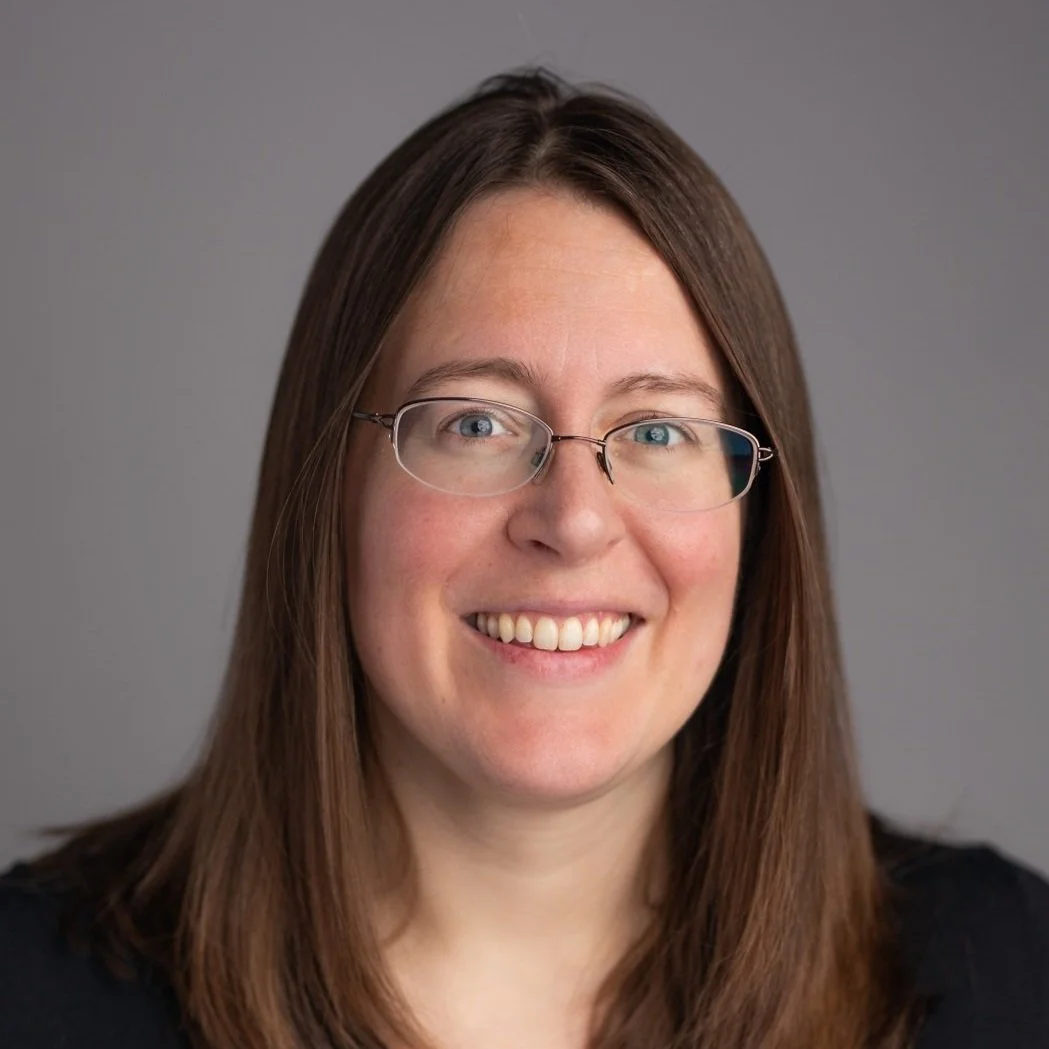
Liz Gloyn is a Reader in Latin Language and Literature in the Classics department. Her research focuses on the intersections between Latin literature, ancient philosophy and gender studies. She also has a strong specialism in classical reception. She completed her BA and MPhil in Classics at Newnham College, Cambridge, and then completed a second MPhil and her PhD at Rutgers, the State University of New Jersey, in the US. She has been at Royal Holloway since 2013.
In this interview, Dr Liz Gloyn discusses chapter 8 from her book Tracking Classical Monsters in Popular Culture, and gives some wonderful insights into her writing journey and shares some advice for students.
MIEKE: Today we are joined by Dr Liz Gloyn, who is a Reader in Latin language and literature. What is your area of study?
LIZ: I specialise in Latin literature, so writing from about 100 BC up to about 100, 150 AD. I'm interested both in the literature that was written in that period and in the social history and how that is shaping what people write and what they want to write about. I'm interested in coming at that from new, interesting, and different angles that haven't been used to understand these texts before. They've been around for thousands of years, but it's amazing that you can still find new and interesting things to say about them. I also have a specialism in classical reception, which is what post classical cultures do with classical material when they get their hands on it.
ISOBEL: Do you want to tell us a little bit more about the chapter that we're going to talk about today and the book as a whole?
LIZ: So, the chapter we're talking about today is my chapter on receptions of the minotaur in contemporary Anglo-American culture. That’s from a book called Tracking Classical Monsters in Popular Culture, and I wrote that book because it wasn't there when I needed it. I was working on an article on Ray Harryhausen and the use of monsters in the 1980s’ Clash of the Titans, and I was looking at all this stuff about monster theory in the 80s. And nobody was talking about classical monsters. It's all serial killers or vampires or werewolves, and classical monsters were completely left out the conversation. Even in quite contemporary, modern takes on what monsters were. Especially because in my professional life, I spend a lot of time with classical reception I wondered, why is no one talking about this? So, I made the book be there. In so much of my scholarship I write it because it's not there and I want to read it and so that book is really about taking this idea of monster theory, which sort of started emerging in the 90s as a really big way of interpreting and understanding what monsters do with our culture and saying, OK, so here is a framework for understanding stuff, what happens when we put that onto the classical monster in the modern era?
People had already been playing with the classical monster in ancient texts, but that wasn't where I was interested in. I was interested in the work that monsters were doing culturally with contemporary material, and that's really what the book tries to unpick.
MIEKE: What was the process like for researching and writing this chapter, there's quite a few different receptions in it, so how did you go about putting it together?
LIZ: There were two sides to that research. The first part was finding all the receptions I was going to write about because, I didn't know about half this stuff before I started. Then working out which ones I wanted to write about, because some of them were interesting but didn't fit with the other ones, some of them were very superficial. So, half of the job was finding those things, and the other half of the job was making sure that I had read all of that secondary scholarship. In the chapter I talk about Picasso's use of the minotaur, so I had to have read a bit about Picasso and his use of the minotaur. This is what that is always said about classical reception scholars is that we have to be credible not only to classicists but also to anybody else whose field we're wandering into, because if this is read by people who work on novels to people who work on films or whatever, it's got to be credible. I've got to know the conversations they're having in their fields. So, it was about making sure I was grounded in all of the different kinds of literature around this topic, so that was sort of the researching part.
ISOBEL: Why do you think modern day people are so fascinated by classical mythology like the minotaur?
LIZ: There are a couple of reasons.
There's the starkly postcolonial reason and the class-based reason, which is classics has been a symbol of power and authority and the ruling class for centuries.
One of the first things that the British did when they wandered into various places they conquered was to impose a new school system that has the British way of doing things. And that means learning Greek myths rather than whatever the local myths and stories were. And so there's a proximity with power and association with prestige. And you know, that's why people in the House of Commons will still quote the Aeneid in 2023.
That’s the negative approach though. There's definitely part of that there, but I think one of the reasons that monsters continue to be helpful is because they've become so flexible. They've become so good for exploring issues that the Greeks and Romans wouldn't have known about. For instance, there's a section that talks about how minotaurs are used in dealing with neurodiversity, representing neurodiverse characters. The Greeks and Romans wouldn’t have a clue! That's not a medical category they had, but because of the long life of the monsters and the way that they've been repurposed over and over again to explore these issues and because of the minotaur’s long association with the inner monster and the outer human, it becomes a way of exploring those issues. Of course, what happens in the two books that I've picked is that the person with neurodivergence is presented as everyone fearing them as a monster but is not a monster in the slightest. They're just very human. And it becomes a way of using that monstrous trope and that fear of the monstrous to explore what are you actually afraid of in human difference, where is actually the monster in this in this scenario and it is not the person who you are saying it is. That's a very 21st century move that kind of sympathy for the monster kind of thing is very, very new. Of course, best exemplified by the lovely Lady Gaga who is mother monster to all those poor little monsters who can't come out as LGBTQ+ in their tiny rural American communities, because that's essentially, a death sentence where they are. It’s a very, very modern idea to really claim the monster in that way. And I think that's definitely part of the current wave of them is this reclamation energy. Medusa, for instance, being seen as a survivor of sexual assault and the power that can be for somebody in that position to say ‘I am here and I have this power now and even though this horrible thing has happened to me’. So that reclamation energy I think is very strong at the moment, but I think it's just the fundamental ability for these stories to be ways into talking about things and to become ways of expressing and exploring things that are very powerful.
MIEKE: I always find it interesting how, Greek and Roman myths get rehashed over and over again, because they still tell really important stories.
LIZ: There’s always something new. So many of them get something else out, they become the portal into getting at something else that's really relevant for the moment they’re written. But you wouldn't be able to get to if you were using a contemporary story, because it would be too close to the bone. Too harsh, too sharp, and there's something about having the distance of classics and get the incisiveness of it that lets you get that distance.
MIEKE: Just out of interest was this book something that you really enjoyed writing? It sounds like you really wanted to do it and that you enjoyed it.
LIZ: This was not meant to be book two, this was meant to be book three. I did my first book, which is based on my PhD, and that was a long time in the making, because I did the PhD and then I had to turn it into a book, and so I'd spent about 10 years with that before it went to the press. In my head I thought I was going to go and do the second book, which is the companion book to my first book. Then a publisher came up to me having heard me give a conference paper and asked if I was interested in doing something along those lines and low and behold, book three became book two. And I'm so glad it did because during my PhD, I got into a bit of a place of writing where my style was quite rigid. This book was never meant to be that, this book was the accessible, easy read book, which meant a completely different kind of writing, and it's completely transformed by academic writing afterwards. I am now much happier to throw rules to the winds. I can write in a freer, more elusive, more connected kind of way. Which is a powerful thing to be able to do, but I would not have been able to do it if I hadn't written this. It was always meant to be marketed more broadly rather than just the strict academic press stuff.
ISOBEL: Could you tell us more about your writing journey and your career so far?
LIZ: I did my undergraduate and my master’s at Cambridge, which on the one hand great. On the other hand, created quite a lot of problems for me in terms of writing.
The Cambridge system is very different. You have to churn out an essay once a week while doing all these associated reading to be able to do all the referencing and all the rest of it. You have to just be able to churn out vast amounts of content at high speed.
So that was what I was trained for in my undergrad, to be able to write a lot that was quite informed, but you did it on first splurge. Unfortunately, as you carry on through the process, that won't do because you then have to go back and edit and improve and my entire PhD, really, was about learning how to edit my own work and not just sit with my first stab at it.
What I say to students now is that there’s a little bit of a false impression given because when you open the book, the words sit there and they're in their published form, and it looks like that was the way they were first written. And no, that's not how it works, it's a whole process, but the problem is that we only ever see the finished version. You don't see my three versions with red pen all over them and arrows and crosses. That whole labour is hidden on the published page. For me, learning that that was normal and learning how I had to do it and learning what my process was rather than just splurge and do, that's kind of been the really big thing about my writing journey over that process. I used to be very rigid about it with bullet points and structure. One thing I did with the Monsters book that I didn't do before, I cracked out coloured pens and I made mind maps and suddenly that really helped, in a way that I'd never done with the PhD book. For this totally new project, I needed something to open the brain up a little bit, and that was great. It’s always developing, it's always changing. It's quite exciting really.
MIEKE: What advice can you give to students in terms of writing, but also in terms of university?
LIZ:
It is much better to sit down knowing you're going to write something imperfect and inadequate and then be able to come back to it than sit in front of a blank page.
And that's really hard, it's really hard to allow yourself to be bad at something, but actually it kind of has to be the first step in moving forward in writing. For me anyway, that you know you're not going to get it right first time. To do that of course, you need to make sure you've left yourself time to do the editing and to do the refining and to do the extra reading.
I think something else I really wish I'd done more during my undergraduate degree is read more. I wish I had, just explored, and just read stuff because it looked cool. I didn't get to do that till my third-year dissertation and I wish I'd spent more of my earlier years just reading cool stuff because it would have made the kinds of things, I was thinking so much more interesting.
But I think the other big tip I would say is that you can't flow if you are already poured out.
Which is a fancy way of saying that wearing yourself out does not create good writing. Talking to our dissertation students last week about what counts as doing dissertation work, one of the things I said to them was that going for a walk can count as dissertation work, staring out the window can count or going to feed the ducks in Windsor Great Park can count as dissertation work. Because it gives the unconscious part of your brain a chance to process and chew over the thought that you've been having. And that idea you haven't quite sorted, that might click into place, because you've given your conscious brain a break while your unconscious brain is spooling away and solving the problem that you just can't quite get to grips with. And if you don't give yourselves those moments of quiet and down time to do that unconscious thinking, it's not going to happen because your active brain is just going to be too wound up and too busy. So don't underestimate building in that rest time.
And I know as you go through a degree, it becomes more and more and more panicky until third year becomes a pressure cooker and then all bets are off. But being aware that that is the normal journey and the impact it has on your academic work and the need to really be proactive about taking that care that you're in a position to do good work is so important. But again, it's all interlinked. But thinking of yourself in that holistic sense and thinking that if you are in a good condition overall, will help you write better and then indeed edit better and think better, it all comes together.
ISOBEL: I think that's really interesting. In second year I wish that I had spent more time reading more for enjoyment, but texts that could be applied to my work because in second year you kind of get to a point where you're used to it and you're in this routine. But you think, ‘what more could I do to succeed further?’ And you don't think I should pick up a book that has something to do with this that no one suggested to me.
LIZ: This is an art that has a little bit died out partly because of the pandemic but also partly because more electronic resources are online. And people think they can get whatever they need on the Internet, and yeah, sort of. There used to be a wonderful art of going and doing library shelf diving. So, you'd find a book you were interested in and then you just see what was on the shelf next to it, and you’d just pick a random book. This was that kind of exploratory, really random serendipity. Nothing is ever wasted because you read something and you might not be able to apply that to now but you never know where you come across it later, and it's all building up that depth of knowledge and being able to think the really big, interesting thoughts and it's great.
It’s one of the things I like best about research, is reading all the stuff, and it's one of the real challenges about the current project I'm working on, which is sort of being able to say no, you have read enough, stop the reading. You now have to go do the redrafting.
MIEKE: I think that's really good advice. Thank you for joining us, Liz.
LIZ: Thank you ever so much. It's been a pleasure.