
Interview with Harvey Wiltshire, Department of English
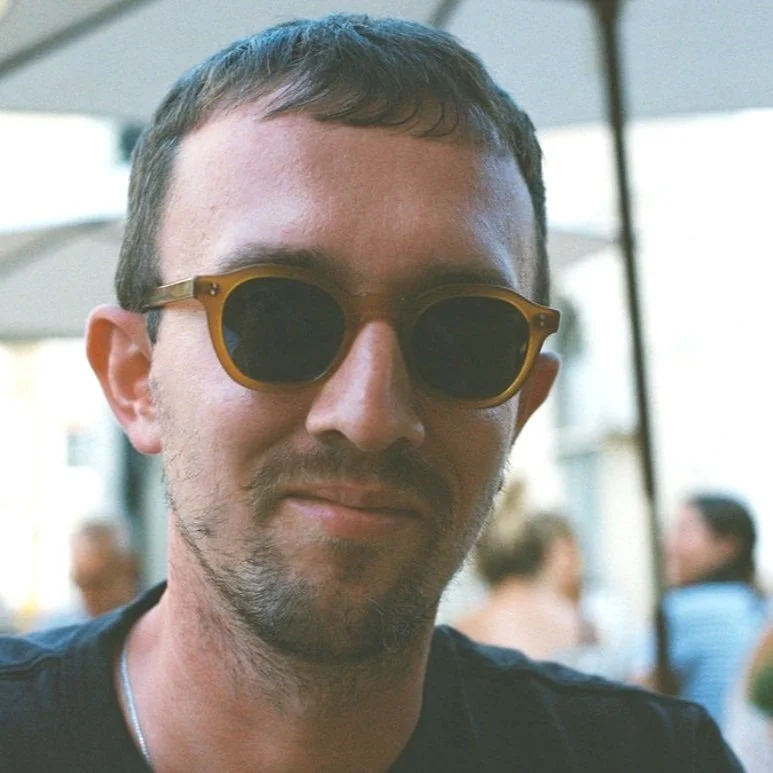
Harvey Wiltshire is a Teaching Fellow in Early Modern Literature, Shakespeare, and Inclusive Pedagogies, having joined the Department of English in 2021. His research explores the relationships between medicine and literature during the early modern period in England, but he's also published on trauma in Shakespeare's narrative poetry, emotion and bodily fluids, and has forthcoming work on early modern economic, and the Elizabethan succession crisis.
In this interview, we discuss Dr Harvey Wiltshire’s piece, ' Shakespeare and the Plague of Productivity’ which is chapter 3 of Lockdown Cultures: the arts and humanities in the year of the pandemic 2020-21. Harvey gives us insight into his journey in becoming an academic, and gives helpful and honest advice for those looking to go into academia and for writing in general.
MIEKE: Today we are joined by Dr. Harvey Wiltshire. Could you please start by introducing yourself what your piece of work is about and what your academic focus is?
HARVEY: I am a Teaching fellow in the English department. I focus on teaching rather than traditional research outputs. I specialize in early modern literature and Shakespeare, but also, part of my job title is inclusive pedagogies which means I’m work-loaded to think about how to make teaching better and more inclusive. But even though I don't do what you might think of as traditional research in specialism of early modern literature, I am paid by the university to do scholarship, which is more related to teaching what the subject is. But I still do my own research as well. My real research interests are literature from the period in which Shakespeare is writing and the history of medicine, scientific discoveries, medical knowledge at the time, and how that's reflected by the literature being written. What I do is really interested in what Shakespeare means in the contemporary moment. But what I hope comes across in this piece is thinking through what Shakespeare means in a really specific cultural moment that was the pandemic.
Most academic writing can start in one of two obvious ways, right? You have an idea, and you research in that area. You might write an article or draft a proposal for an article or a book or a chapter for a collection. And then you put it out in the world to see if a publisher picks it up. This was quite different. I was working at UCL, and lockdown hit, and the Dean of the faculty of Humanities there, Stella Bruzzi, was really interested in keeping research and community alive and came up with this project Lockdown Cultures. It was a call to people working in the humanities, students and staff to basically say, how is this quite strange moment of the COVID pandemic experience making you think about your research area in new ways, getting you to return to literary texts or films or piece of music or art in new ways? The call for submissions lined up quite nicely with what I had been thinking about.
Why are so many people talking about Shakespeare in March 2020 - what the hell does Shakespeare have to do with people being locked down?
I was interested in that, and social media was a space where I think everybody was finding communities and connection when we were locked down in our in our flats and homes. And it started quite organically from that place and just noticing that people were talking about, you know, what Shakespeare did when plague hit London in the 1590s. So it pivots from COVID - as a kind of really interesting contemporary moment - towards something that might feel a bit more traditional. What I do is maybe debunk some assumptions about what Shakespeare is doing when he's writing in that context. The other part of this project was being brought onto the editorial team and getting to read all of the other pieces. It's such an obvious thing to recommend to anybody but reading other people's work makes you a better writer. Editing gives you a better sense of what's good and what works, and I definitely found that. Editing is very much like what we do, marking your work, looking for ways to help you refine the clarity of what you're trying to say. It's really easy when you find a topic that is organic and of interest to you.
ISOBEL: It was quite interesting how you used this conversation that was going on with social media and this pressure of productivity and increased hustle culture. Do you think that social media has perpetuated that pressure of productivity on people?
HARVEY: Yeah, absolutely. It's a space of virtue signaling, isn't it? The good thing with social media is for many people a place where we celebrate, but also commiserate with each other. I think in the pandemic it was a place where lots of people were in in those pre-existing communities, but also people finding new communities during lockdown where we could just say what we were feeling. I suppose around the productivity issue, I just felt a real irony in some of the discourse around how Shakespeare wrote King Lear during his own kind of pandemic during the plague. And therefore, what are you going to do when we're in lockdown? And for many people, it was a matter of basic survival, medically, but also, just keeping one's mental health together. Suddenly you had this extra time. And I think we were so conditioned to think that spare time has to be used purposefully. But for so many people the basics and the rudiments of self-care were the only things that were imaginable. You can understand where suddenly being gifted time - some people saw as an opportunity to learn new skills or to write that play, or do sourdough starters and stuff like that. It is totally mad that precisely the point the world seems to have been forced to slow down a little bit, there's this need to make use of that time. And I was approaching that from frustration. I think there's a big irony in this piece in that I talk about the pressures of productivity and a constant drive to achieve. And in many ways, this collection and my submission to it represents precisely the problem, right? I would have been forgiven for doing nothing, but I was hustling. To get my permanent academic job, I needed to be writing that next piece. I don't know if I feel guilty about that, but certainly, I recognize the irony in it.
MIEKE: I found your use of tweets as sources really interesting. I feel like there's often quite a lot of pressure to find really academic sources for essays. Did you enjoy writing this kind of essay where Shakespeare's work intersects with the modern day and our responses?
HARVEY: I think that idea of it not having anything to do with Shakespeare probably speaks to that sense in which they might be talking about Shakespeare and referencing Shakespeare but there's something totally different going on here. As a Shakespeare academic, why is it that Shakespeare's being used? Why is it that Shakespeare always seems to offer something solid and safe, that we return to? But it was an interesting piece of write. There was literally a point where I had to go back to the MHRA style guide and work out how to reference Tweets. Because I've not done it before, it felt like a new approach, but I really enjoyed it. It was almost journalistic, I've seen this thing that's happening right in front of me and I've got feelings about it, and I've got some expertise in that area and it all locked into place quite nicely. But it's quite exciting, to feel that energy between something really old and the new context and it gives an immediacy to your writing. It's a very short word count for a piece, probably about three and a half thousand words. We don't often get to write that kind of length, so it had to be punchy and I think from social media, through the word count, to the kind of quite authentic experience of researching and thinking about it. It just became quite pacey. I hope it reads well.
ISOBEL: Yeah, I thought it was really unique. I hadn’t read something that used social media in that way, but also within context of earlier writing, especially something like Shakespeare, and to do with the pandemic as well.
HARVEY: We often think about only having one writing voice, and we're constantly trying to hone and craft that one voice into something better. But the truth of it is you can be quite chameleon in the voices that you deploy in a single piece like that starts in one way and then becomes slightly more academic in tone.
I write in different ways for different things and understanding the context in which you're writing is really important.
The immediacy of the moment I was writing it, but also the expectations of the word count meant I wanted to say things quickly, and I couldn't waste word count on fluff.
ISOBEL: Why do you think that it was such a point of discussion during the pandemic? Specifically looking in on Shakespeare and comparing that to the plague and the pandemic.
HARVEY: I think because in any moment of crisis, you look back to points of similarity and you know the Black Death is something that we know a little bit about, and Shakespeare's always circulating in the cultural soup that we exist in. As the piece gives an account of; it's just one person starting off this chain reaction and that's something weird about social media, that viral nature. Social media is a space where ideas proliferate and kind of get a life of their own. One of the places this piece ends up is recognising that this story had a life of its own and had truth and feeling in that, people were turning to Shakespeare and thinking about Shakespeare in that moment. But that also, there was more to that story, and I could say something about that. Not to say referencing King Lear was bad or incorrect, but actually made it an even more interesting thing going on there that people weren't necessarily aware of but as a Shakespeare academic, I was compelled to write down. Another part of this project is, it’s almost a time capsule of what people were thinking in a community at the time and I think it was a really interesting way of writing, getting it from the existing community and saying, OK, if we give you space and time to write about whatever you want in this context, what does that look like? It would be really exciting to ask students to write in that way more.
Mieke:
So now a bit more about your career. You mentioned that you are an early career scholar. Can you explain what that means and what that means for where you are in your academic career?
Harvey:
Early career in different career paths definitely mean different things. I've been really lucky, I've got my permanent academic job quite young, before I was 30. I could claim a lot of hard work, but lots of people who do PhDs and academics work really hard. A lot of it is just being in the right place at the right time and I’ve been really fortunate. But I suppose early career, I'm definitely still in that phase. Often, it's up to five, maybe eight years post PhD. I finished my PhD in 2019 and started here with my permanent job at Royal Holloway in 2021. To go into the pandemic without a job and to come out with this job, I felt very fortunate. But I definitely still see myself as early career. The majority of my colleagues have been working in academia for much, much longer, up to 30 years and have multiple books. I've just put my first book in to Cambridge University Press to see if they want to publish it, which is quite scary. I started my PhD in 2015, and since then have continued to work on it because that is not a book. A book has to be something slightly different, it’s a real labor of love. But I've sent off into the world and I still feel the anxiety of like strangers reading and judging me and my work.
How did I come to this place? I did my undergraduate degree at Royal Holloway and then I stayed on to do a master’s degree. I was really fortunate to get a scholarship to stay on and do an MA in Shakespeare. I then did my PhD at UCL and I loved it. Throughout that I was researching, writing and going to conferences during my PhD, but also doing a lot of teaching because to be an academic you kind of have to have these dual pillars of proving yourself as a researcher, but also building teaching experience. But I did lots of different teaching jobs – I worked Queen Mary, used to examine essays at Cambridge, worked at UCL in the English department, but also the comparative literature department just jobbing it, hustling. You can see where this piece emerges from, the experience of just having to be hustling all of the time to build a profile up.
But academic jobs are few and far between. One or two in my field would come up each year in the UK. And often people talk about leaving the PhD and going into the wilderness years where you just have to fend outside academia while keeping enough skin in the game to eventually get a job. That's quite brutal. I've been really lucky in that my time in the wilderness was short but one thing I did do is I worked in widening participation in universities, but in a kind of non-academic role supporting events to get underrepresented groups into university, thinking about university and that diversifying of who I was as a researcher, teacher, but also someone who has experience of other kinds of work that goes on in the university, definitely played a part in getting my job here, but still very much have to hustle, I’ve written two new pieces this year.
The headline is it’s a real slog. And I don’t say that to put people off. This is true for any career path, you have to be really realistic about what's required and what the chances of success are.
And certainly, I remember when I finished my PhD, where you've spent a period of time in one place building a network of friends and embedding yourself in a place; knowing what red lines I wouldn't cross. Some people are happy to go to America to find jobs or to commute for four hours to Birmingham. And I was lucky in that I was in London, and you've got a glut of top institutions. I wouldn't want to sugarcoat any of it, it's also a really wonderful job. Teaching is great, I have wonderful colleagues. Workload, yeah, bit of an issue sometimes, but also on the writing side, what a joy to write about things I'm passionate about.
ISOBEL: Do you think that doing your PhD and eventually teaching has aided in changing your academic writing style? Do you think your style has changed or developed?
HARVEY: It's definitely developed. The skill in teaching is bringing a vitality and life to what you know about and what you're interested in as an individual and also what you think students should understand about text or subject matter. And necessarily that has to be in one of the different voices that I've spoken about. In lectures I will assume different voices as I go. Sometimes I want to be quite nerdy about things, and sometimes I want to shift into a different tone and approach, and it's impossible to think that it hasn’t impacted the way I write. I'm gifted opportunities to talk about Shakespeare and other early modern writers all the time. In discussion with students, learning from students, when students don't understand what I'm saying, being forced to re-phrase or re-configure the idea so it’s accessible to a room of different people. It’s impossible to think that hasn’t fed back into my writing. I think my writing has a clarity that it didn't have before, and I hope that it continues to work in that direction. And there's something about writing. The prose sometimes have a has a life of its own and I think that's often a bad thing and going back to work and thinking: is that actually what I meant to say? or is that what I ended up saying, and do I actually believe what I said? And that's why proofreading is so important. I enjoy the process of writing; my writing process is quite compressed. I like to build up a critical mass of thoughts and ideas about something, and then just release it quite quickly. I think I probably wrote a first draft of that in 2 days or something. Then went back to it and reworked it, but there's an immediacy to it. I've had periods where I've not thought about my work for a month or so and then written 10,000 words in a week because you just have that clarity of what you're writing about. There's nothing worse than chasing the essay question, but also just admitting that sometimes, your prose isn't good is really important, and taking criticism as its meant.
MIEKE: What advice would you give to students who are considering going into academia or just in general just for writing?
HARVEY: Well, I guess I'll take this in two questions. Be honest with yourself about where your passions lie. I think that my experience of becoming an academic is a genuine meeting of what I enjoy and what I felt like I was good at. For students, recognising even within an individual module, what you actually like in that module, you don't have to like all of it. What text or what subject or what lecture did you find inspiring and interesting and found yourself wanting to know more about. But also, what you're good at, what do you get satisfaction from? Find what you're generally passionate about and be really honest with yourself about if you really like reading, if you really like writing.
This sounds like a bit of a criticism, but there are lots of people who see academia as like a really great job. It has some kind of cultural cachet to be an academic, it’s seen as having social standing and status. But that isn't enough, that kind of desire to do the job, it's not enough. It's got to come from a place of being genuinely passionate about what you do and it’s easier to find that drive when you're interested by it.
For writing in general, never make a snap decision about the subject you want to write about or the question you want to answer.
I remember doing this, but it's easy when you've got 10 questions in front of you to not take time to find the one that you genuinely might have interested in, but to immediately discount the six that you don't want to write about. I think challenging yourself to think even if only for 20 minutes time, if question four which I don't like the look of was the only question I could answer. How would I go about? Because it's really easy to be quite lazy in those situations to go for the easy question. But don't tie yourself to an idea of what an academic essay should necessarily look like. I'd love to read more essays that came from a place of authentic engagement. And that's really difficult because you know, I can say that having been doing this for 10 years and kind of have found the kind of confidence to do that. But why wouldn't you write about something you're generally interested in? Find opportunities if you can, to go to your course convener. And say, I think I want to write about this, but I just am unsure because I feel like I'm taking it in a different direction. And I think 99 times out of a. 100 that that tutor will say it sounds great, if only because it sounds like it's coming from a place where you genuinely want to write about that subject.
The more you read criticism, the better you get. I always advise students to do this: emulate people who do it professionally and who have been doing it for longer.
When you're reading criticism, that set reading before class, have two or three different colored highlighters, one for factual information. Have another color that is just for if you like the phrasing of something. It's just it's a no brainer to not learn from the stuff you're encountering and to see that when you read criticism, you're learning from it in several different ways. To be clear, it's not plagiarism. It's learning from and emulating style. If you read a piece of criticism and think ‘I didn't understand that and I had to go back to it three times before I even thought I was beginning to understand it’, why might that be? Compare it to a piece that you've read and understood straight away. And of course, you want to be more like the second writer. So, take the time to understand why that is.
So many, particularly first year students, feel like they come to university and they have to a different kind of writing voice, but no, as soon as you do that, the work loses its authenticity.
MIEKE: Thank you very much!