
Interview with Shzr Ee Tan, Department of Music
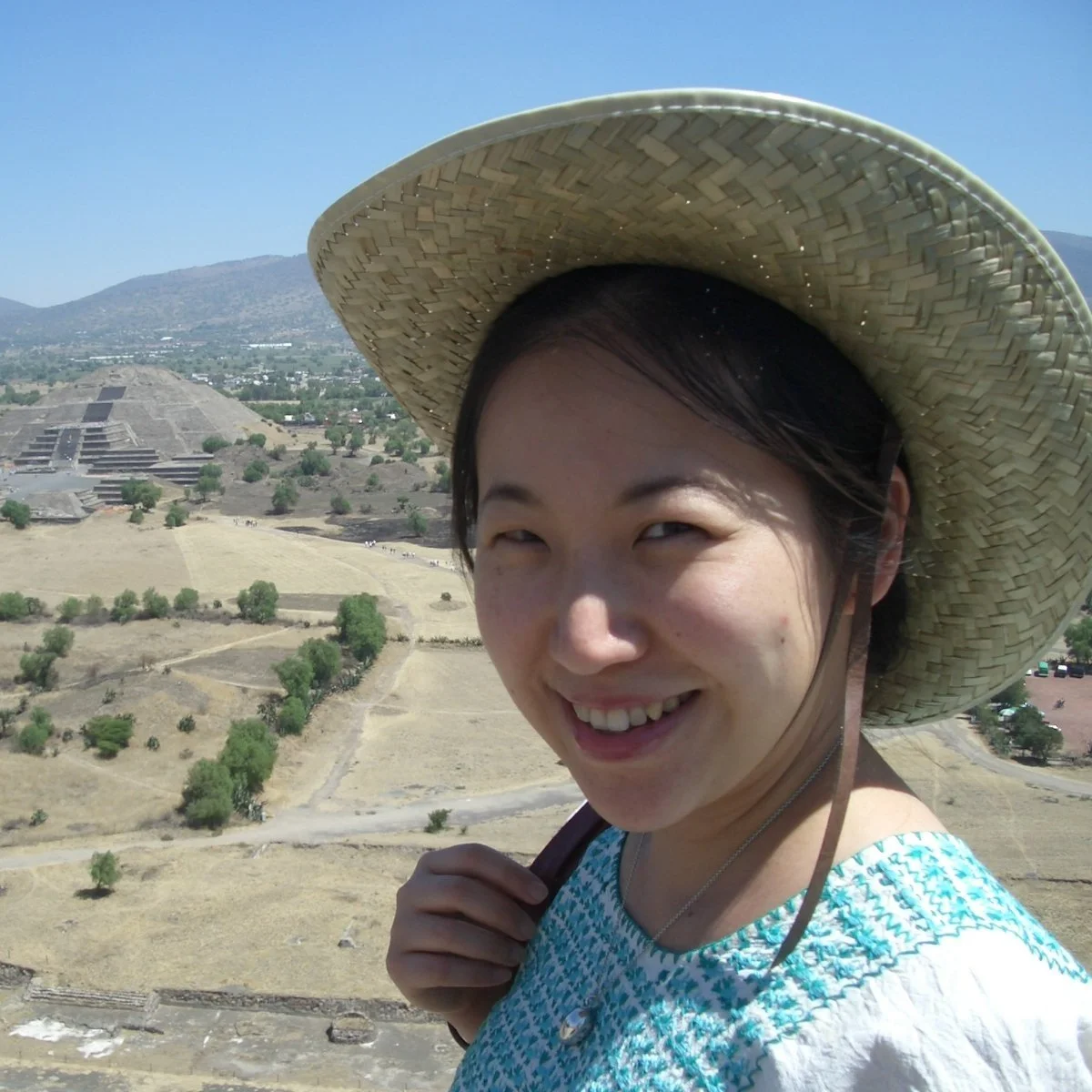
Shzr Ee Tan is a Reader and ethnomusicologist (with a specialism in Sinophone and Southeast Asian worlds) in the Department of Music. She is committed to decolonial work and EDI (Equality, Diversity and Inclusion) practice in music and the performing arts, with interests in how race discourses intersect problematically with class, gender and recent debates on posthuman digitalities, climate change and multispecies thinking. Shzr Ee is also Vice Dean of EDI for the School of Performing and Digital Arts at Royal Holloway.
In our chat with Shzr Ee Tan, we discuss her piece ‘Six Provocations on Decolonizing Music and Critical Race Discourses’, which they wrote in honour of David W. Hughes. You can read it here. Shzr Ee explains her experience in becoming an academic and lecturer at Royal Holloway, and shares some thoughtful advice on writing an adequate academic essay.
ISOBEL: Today I'm joined by Shzr Ee Tan from the music department. Do you just want to start by introducing yourself and your academic focus and then explain a little bit about what the featured piece of writing is about?
SHZR EE: Sure. My name is Shzr Ee and I'm the Vice Dean of EDI at the School of Performing and Digital Arts. The article that I'm sharing with you all today is called Six Provocations on Decolonizing Music and Critical Race Discourses, and it's one of those articles that tackles a theme, which some people might think of as a buzzword - something that's trendy but not necessarily going to last. I deal with that head on in one of the first sections of the article, where I consider a possibility, probably a reality, that people will just start taking decolonial or critical race discourse as par for the course: ‘yeah, everyone knows what it is’. Or (groan): ‘those people again!’ So, I want to deal with this through the approach of lived experience.
I write about myself. I write about my own journey into Music studies. I also write about feeling out of place both in my early days in the UK as well as (to a certain extent) in Singapore, where I was born.
And I also write about the ambivalence of the “now” and also looking to the future. But I also want to, through the article, bring in considerations of what community might mean, so it's an article that is deliberately written in a way that's very conversational.
In the article, my writing style is a departure from my usual one. So, I write as I talk in that article, which means different accents, different use of colloquialisms, many run-on sentences because yeah, ADHD and all that, and multiple clauses, many hyphens and many em-dashes, which in some ways makes it both easier and more difficult to read. But I also approached the article from the perspective of (in quotation marks) “Bad English”, and this is a term that an Asian-American, Cathy Park Hong, who is of Korean descent, writes about. She writes about how she grew up with English as a second language and early years, and not really knowing how to find her voice. And you know, going forward with the idea that we should just embrace our different accents and embrace our so-called broken English in a way that can teach ourselves to find our own languages, our own ways of communicating with people and talk about how there are so many different kinds of the English language used around the world. And to explore that and not berate ourselves for not being able to speak English properly, for example. And I know this is actually quite a controversial issue, especially for a publication like First Ink, isn't it, which is ostensibly a platform for encouraging people to think about their writing style and to think about what academic English might look like. So, I think there's space for many different explorations, but the most important thing is to make sure that we're able to communicate with one another, each other, in the best way that we can.
So, I think there is really an important thing to be said about writing in a version of English that will help you express yourself the best way for your intended audiences.
So, this will vary from situation to situation, people to people, and so I think knowing how to find the different kind of English you want to use for whichever situation is really important. And I think First Ink is really a great place to try to bring in many different perspectives of what this might mean. I think writing allows all of us to find some way of making our own argument for ourselves first, amidst all this noise. And sometimes we also want to embrace the noise as a kind of assemblage. And I think there many different writing styles.
So anyway, back to the article! I do present six provocations, with no real answers. I do give a preamble in terms of why I was asked to write that article, in honour of someone, Dr. David Hughes, who's an old friend by now. And yeah, he was instrumental to making me feel very, very included when I first came to the UK… Despite the fact that he's actually what some people might call an “old white male”. But I think we all have lessons in allyship in how to make conversation. So, in that article, I tried to make conversation with several imagined members of the public. I asked about whether everyone is really on board with the decolonising music, or just decolonial campaigns? Or are they just kind of like, I’ll wait for the moment to pass, and everything will be normal again? And I conclude that nothing’s ever going to be what it was again. And this is the nature of life and history. And then I ask who should be leading these campaigns, and several other things.
ISOBEL: Yeah! Is there anything specific that you wanted to achieve when you worked on this?
SHZR EE: So, I was actually asked to write several pieces on decolonization around that time, and I did write a very long one, which I've shared with you, which was so long that it had to be split into two. And that is a fully referenced sort of academic English, but slightly complicated! It had a lot of ‘isms and analogies in in that paper, and I thought… Who's gonna read this? Is it just going to be other people who are nerds into decolonization and splitting hairs and like, yes, very impassioned people who care about the subject.
But actually, a lot of people who are experiencing the impacts of colonialism, coloniality and as well as active decolonial campaigns actually don't use the words we are using in academia.
So, I do have a completely different platform for that, working with migrant workers. We're a group block and we actually upload more videos than we actually write. And then I find that this article is kind of a middle ground that can speak to people who are kind of curious, want to engage and want to go beyond looking at Instagram videos or memes or those kinds of cute TikTok explanations. Yeah, so that was partly my aim. And partly because I felt we needed to just be very frank and honest about things. So that's why I wrote it. It comes from a lot of personal lived experience as well as experiences of friends. And it's a bit ranty, but I guess I don't apologise for it.
ISOBEL: I really enjoyed it. I mean, you talk about it a little bit in the piece, but do you just want to go into a little bit more detail about what got you into decolonising as your main area of writing? Or just ethnomusicology in general?
SHZR EE: I came to the UK as a 17-year-old with lots of delusions of grandeur. I thought I was going to be a concert pianist and I went to a conservatoire. I thought it was me, this fabulous soloist and international tours and all that, and it never happened! For all sorts of reasons. Not enough talent, too competitive and really just not being able to understand how the world worked, or the scene. But coming to the UK allowed me to rethink why, because of the colour of my skin, people started making assumptions of the kinds of music’s that I should be playing. I identify as an East Asian woman and people sort of thought I should be playing Chinese instruments. And I was like, well, not really. I play the violin badly and I play the piano. I never thought of the violin or piano as western instruments. I just thought they were just music! It was only coming to the UK that I thought a little bit about difference, and realising that actually, the instruments that we had taken for granted actually ring with the history of how I grew up, the history of my histories of my parents, my grandparents, except through colonial lands. And it was a kind of slowly coming to an understanding of self-understanding of communities.
Why, when I first came to the UK, it was, you know, tricky, making friends who are locals, who all kind of knew each other from school. And I found these circles hard to break into. All my friends were international friends anyway, this sort of growing sense of my identity as a Chinese person and diasporic Chinese person who is in the UK, who didn't necessarily fit with other Singaporeans in the UK either or in Singapore?
It made me try to think about finding out a little bit about my great, great, great, great, great grandparents and where they were born, and what sort of, you know, musical cultures they were listening to. And then I thought, hang on, I don't want to be pigeonholed by that. I should just find out about everything around the world. And I tried my best and, you know, gave up after maybe about six years, realizing that a) I could never be able to find enough and b) who was I to think I could discover everything about the world. But I think the exercise was very, very humbling and I actually do mention this because at the end of the article, I feel that I still don't have answers and we're still learning a lot and I'm sure that the article will be outdated in like probably two years’ time. But anyway, so that was the beginning of really questioning my own history and the histories of the people around me and why we relate to each other, how we relate to each other, and slowly realising that it was important to get out of bias and to think about what our conversations would look like if we had an equal starting point in terms of cultural differences and an equal way of relating to each other without getting into things like “oh this is your culture, you own it because it is in your lifeblood” and this kind of nonsense, but at the same time thinking about who has the right to represent this and that as well. I mean for me at the end of the day it's a question of whether you've spent time learning and making friends. Not just friends, but you know, keeping, making good relationships.
ISOBEL: I thought you made a really interesting point in this piece where you question is everyone really on board with the decolonising music agenda or are people just waiting for it to pass. Can you just explain why it is so important to be writing about decolonising music for people who may not know much about it?
SHZR EE: It's important because our world continues to change, has always changed, and the dominance of so-called western or white understandings powers economics in the grand scheme of things. It’s just a blip in the broader history of the world. But I mean, just look at the people who are in our college! They come from everywhere. You know, a lot of all this relates to how people who might identify as post-colonial are going to the UK to study Music or Theatre or dance or TV and film, with a different kind of post-colonial mindset. So, I'm talking about, you know, the former British Empire and people who are equipped with only English as a primary language, like myself. And to a lot of people who do speak English with an English accent, and we're told to speak English in this country, they see that as, “Oh, my God. You call yourself a decolonised person, and yet you're speaking in English. I mean, who does that?” There's a kind of weird paradox going on. If we're going to go back to where everything happened before the British came. It's more about what you going to do with the impact of all of that and how can we look at how the structures that oppress us are also structures and pillars that are holding up other aspects of our lives, and of our well-being and learning to negotiate through these many different paradoxes, working with what we have and bracing the whole ambivalence of it all. It's very messy. It's very difficult. With international students and with new colonial powers coming into being from all around the world, with new conversations and new languages developing, I think it's important to think about decolonisation, because just look at where the money flows.
ISOBEL: You touched on this a little bit earlier, but I thought the journalistic, conversationalist approach you took to this piece was really interesting. But how would you say your writing style has changed since you've been writing? And also, since you've been teaching?
SHZR EE: I had a little gap in my biography. So, when I came to the UK, I realised that I was not going to be a concert pianist. I was actually sponsored by an organisation which was the Singapore Press Holdings newspaper company. It was a state newspaper company. And I guess it was the only way I get to study overseas and study music overseas and in return for them sponsoring every single thing, from my very expensive school fees to my cost of my living to my books and the airfare, had to work. So, it was. I mean, have you ever heard of an eight-year contract? I did it anyway.
I worked for a newspaper, and it was a scary experience. First of all, a state newspaper that had pretty much ultimate control over the entire media space in Singapore, alongside a state-controlled TV company. It was a very neoliberal and state capitalist organisation.
So, I had to learn about different forms of censorship alongside how, actually, the censorship isn't necessarily even from the state. It's how Singapore is a very small territory- I was working as a music reviewer and I was like, “Oh my God, you know I cannot continue writing bad reviews, because nobody's going to talk to me. I won't be able to get any articles. I won't get to interview anyone.” Anyway, so it taught me things about the ecosystem, told me about the state. They told me I was writing in a style that was apparently pitched at secondary students, and I was like “What? Really.” But it did teach me about deploying different kinds of voices for different platforms, and beyond that. Even beyond writing, I'm very, very grateful for that experience because it paid for my London experience, and it also paid for a lot of learning on the job. What no degree could prepare me for was how to find information… And I could never tell my editor I don't have the information. I just had to look, and that really taught me how to look for things, how to explore alternative avenues, to speak to people and to realise that one person can lead to another person. And that we shouldn't use people, we should, you know, develop good relationships and maintain a community. So yeah. I tried to find my niche. I wrote a column, it was called The Accidental Tourist, which was a title that I stole from a film.
I was sort of like an accidental tourist in my own country of birth, which in some ways had become a different kind of alien space.
After traveling around the world and learning, and relearning, and re-examining, and finding like really odd, weird things that some people might have taken for granted or never stopped to look at. And this included people who self-identified as weird as well, and I did lots of interviews and that sort of fact-finding experience, and learning how to talk to people, learning how to just ask questions, brought me back to academia and the UK. Which is why I pursued Musicology. As a former Anthropologist, I was curious, I wanted to ask questions, I wanted to meet people, and I was also interested in making music, so I thought, why not marry the two? And see where that goes.
ISOBEL: Thank you. Last question! This issue of First Ink is about second year writing. I just wanted to know what advice would you give to second year writers, or just undergraduates in general, about writing or even afterwards about going into academic writing as a career?
SHZR EE:
If you want to write an essay, the first thing you do is gather as much information as you can from as many different sources and you know, lay it all out and draw a spider diagram, and figure out where it all fits together in your head.
In your version, it's okay because you've done the scoping as far as you can, and account for your own bias. And then start to see what sort of arguments are emerging, and then start drafting based on that spider diagram. Then start drafting based on the spider diagram. So, it really depends on what the question is. So, the first thing to do is gather data to try to see whether this data fits with a potential answer to the question. Then you try to find an answer to the question. Hopefully the argument can move from A, which leads to B, which needs to C in an cumulative fashion, but if it doesn't, that's fine. You can jump around as long as you insert signals here and there. You can, you know, after writing the whole thing, you can also go back to reinsert little keywords here and there to try to, you know weave in some threads. Subtitles and subheadings are very helpful with this.
And then after you build your argument, you move towards the conclusion. Try not to repeat what you have said in the conclusion. First summarize, try to have a kind of uber-take and when you do the uber-take, you start questioning the question. Usually when you start questioning the question and flipping the question, there is a loophole in the question. There's something a little bit, not necessarily wrong, but you can flip it.
For example, let's say it was “Was Beethoven a character who was ahead of his time? Or was he standing on the shoulders of Mozart and Haydn?” Well, one thing I could think about is, should we be even thinking about time as linear and progressive? Does it always happen like that? What about overlaps?
What about how, you know, people don't necessarily follow the same timelines, for example. So, there are many other ways to sort of crack it a little bit and find it an uber-take, or kind of questioning of the question. And you know, if you're really good at it, you can start right at the beginning but be careful and consult your teacher about it. So that's one approach that I encourage my tutees to use.
Another approach I think about a lot is when you're reading and preparing all your information, it's very easy to go down the first route and you get anchored by us, and the first reading that you read was so cool and the whole essay is just gonna be about this, and then you forget that there's a whole, you know, shit ton of other stuff that you have to read. You’d be so overwhelmed. Don't panic. This is why you have to do a scoping exercise and make sure that your scoping exercise fits within a one-page, single page spider diagram so you can pace yourself.
When you start writing, I think there's a danger of kind of over focusing and hyper focusing on one small point and part of you is thinking “but this is so important, and I've got to keep you in there”. You have to ‘kill your darlings’ but don't worry - start a second document. So, I've got two documents when I write. One document is the document that is going to be the essay and the other document is the leftovers, so stuff that I've written but I can't use it. So I just cut it and dump it in the leftovers pile. And then when I finish writing the article and I look at my leftovers, part of me goes like, “Oh my God, that was a load of shit. I can't use it” or “Oh my God, this is so great. OK, I can put it back in the conclusion.” This is where I can sort of squeeze in the bits where I thought I was very brilliant. So, you know, you are constantly recycling.
The third thing is to get your friends to proofread your paper for you, because when you're reading, you're in your stream of consciousness but I think it's important to get someone else to listen to, read it aloud and to say like, “Hey, I really don't know what's going on here. You better change this term. Or rephrase, can you make it shorter? Or explain that?” and so on and so forth.
ISOBEL: Yeah, that's really good. Thank you. Thanks for coming on and letting us use some of your time to talk about this.