
Interview with Nick Lee, Department of Media Arts
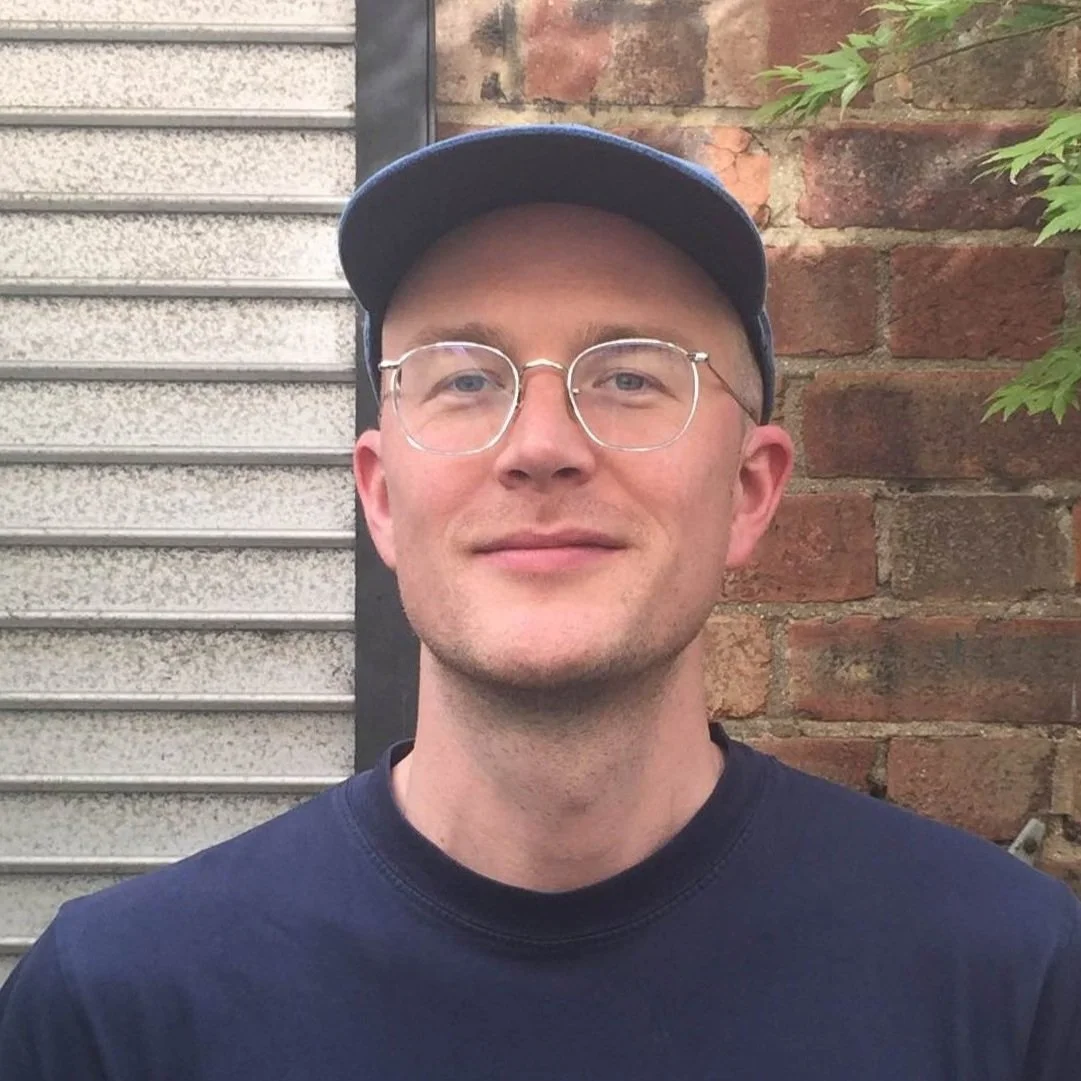
Nick Lee is a lecturer and Chair of the Assessment Board in the Media Arts Department where he teaches modules on American Independent Cinema and Experimental Filmmaking. His research is focussed on marginality and ideological critique within the context of mainstream cultural institutions and forms, with a particular concern for the moving image. Since 2019 he has been a co-editor of The Working-Class Avant-Garde, a special collection for Open Library of Humanities which focuses on the often overlooked contributions to arts and culture of working-class British artists and writers. From 2011 to 2020 he was a researcher at the House of Lords working mainly on policy relating to HIV/Aids.
In our chat with Nick, we talk about his article for Sight and Sound, Party Girl. You can read it here.
CARMEN: To start, please introduce yourself and explain your work.
NICK: My name’s Nick Lee, I’m a lecturer in the Media Arts department, and today I’ll be talking about a reasonably short article I wrote for Sight and Sound magazine about a film called Party Girl.
CARMEN: What was the inspiration behind this article?
NICK: In this instance, my teaching informed the research, and the teaching was the inspiration. It was around the time that I started teaching the module American Independent Cinema, and Party Girl was an independent American film, and I was thinking about what I would like to write off the back of what I’d learned from teaching that particular module. At the same time, I was also doing some teaching on a first year module in the department, an introduction to the study skills element, and I needed a film that was going to be an independent counterpoint to a more mainstream Hollywood indie film, like a Wes Anderson film, that has independent sensibilities but which is much more mainstream. Party Girls seemed to fit the bill - I thought about the film in relation to what I was teaching, and the ideas that I developed in the article came out of that. It was useful - I was able to feed the article back into my teaching, so there was a connection to my research. I also wanted to write something about the film, as it’s quite underrated and unavailable in the UK. It was also the first film to be premiered as a live stream over the internet in the 1990s, so it has a historical significance at the same time.
SEB: What got you into the field you’re researching and teaching in now, and more broadly, what got you into academia?
NICK: The field I’m researching and teaching in is film studies, but with a focus on independent filmmaking and artist film and video, and that’s always been my main interest. I studied in the Media Arts department at Royal Holloway, and I’ve always had an interest in independent work as opposed to mainstream film and television. I did an art foundation after my A-Levels, after my film undergraduate did an English Literature Master’s at the University of Sussex - at that point I wanted to do some more reading, and my more recent research is influenced by literature as much as everything else. I returned to Royal Holloway for my art history PhD, picking up on themes from my undergraduate and master’s that interested me. In a way, I took a circuitous route, but there are loose points of linkage in my interests over time.
What got me into academia in general is an interesting question; I feel like I’ve always been in academia in some sense! Before you know it, you set off to school, then the next school, then a foundation, then an undergraduate. I went off and came back to university twice after that. I feel like I’ve always been in a learning institution, only now I’m on the other end of it. I never made the decision to become an academic. I did visiting lecturer work which went well and I enjoyed it. That eventually turned full-time, and so I gradually worked towards having a career in academia. There was certainly a point a few years ago when I knew this is what I wanted to do, so here I am.
CARMEN: Your article was published in Sight & Sound magazine, as you mentioned, by the BFI. How did you go about getting your article published - did they reach out to you, or did the opportunity present itself?
NICK: I sent an email to the editor with a summary of the article. I didn’t hear anything for a while, until he replied and said he’d like to use it. When I originally wrote the article, I was thinking about where I could pedal it, and Sight & Sound was one of the publications that I thought would be interested. They do a series called Lost and Found, where lost films are “found” and written about - Party Girl fit the bill for that. I was fortunate in a way, as lots of times you have to be lucky with editors that get your work published in the way you intend. It was essentially printed in the same form I submitted it, so it was quite painless - at least more painless than some of my other experiences!
SEB: What do you think you’ve gained from having this article published in a magazine?
NICK: It’s been really useful, because I can now teach the article, mostly for my first-year modules, and partly for my third-years as well. That’s a nice thing to have - having work published gives it the seal of approval, which is one of the key benefits. I suppose it’s good for my reputation and my CV as well! It’s also a nice way to communicate your ideas to a wider audience, because it isn’t a strictly-speaking academic publication. There’s a chance that people might come across your ideas that wouldn’t have normally been exposed to them.
CARMEN: As you just said, the publication isn’t completely academic, so I’d be interested to know the difference between academic writing and writing something more journalistic.
NICK: With the origin of ideas, there’s no difference at all. You have a hunch about something, you’ve done some research, and then you want to communicate that. The thing that was foremost in my mind was the length of the article - I thought this was something I could write with a relatively short world count, and this was the most appropriate way of doing it, so I never thought of this as an academic article. It can help to write something shorter for a slightly different audience! You still have to be clear, engaging, and precise - when you’re writing something that’s short, you have to be coherent with your use of language. I felt like there was a lot I wanted to say about the film and the history, so I had to condense my ideas, and I quite like that process. When it comes to the formal elements, you don’t have to worry about referencing or having a bibliography - I do make a reference to another academic work, but that’s something you can do in Sight & Sound as it’s quite a high-brow film magazine!
However, in terms of the process I approached the article with, I wouldn’t say there’s a huge difference - they’re more or less the same process, though maybe this format is slightly less stressful and more relaxed.
SEB: Looking back at your academic career so far, how would you say that your writing style has changed?
NICK: I’m at a relatively early stage in my career, so I don’t have a wealth of experience to look back on, but I would say that I’ve learnt what works in the context of longer and shorter articles, how to approach different lengths, how to work with editors, and how to take considerations on board. With reviewers, I’ve learnt about criticism - when submitting articles there is peer review, so you have to be able to take the criticism of other academics in the field. Those can relate to the thinking or the style, so there’s always a steep learning curve. In terms of my own style, I’ve not thought much about it. Unconsciously, I adopt different approaches to different tasks, but I feel like I’ve been doing this a while, and so it happens naturally now. I try my best to be coherent and readable - you want your reader to understand your intended meaning and process of arriving at that understanding. I keep those principles in the forefront of my mind whenever I’m writing, from an email to an article.
CARMEN: Is there anything that you wished you had known at the start of your career that you know now?
NICK: In terms of having work published and engaging that side of academia, I would have benefited from more guidance and engagement in that area earlier on when I was studying. It’s quite daunting in the world of publishing as opposed to the world of academia at university. They are different worlds, and you have to learn how the system works. I wish I had a media-career savviness back then, though I wasn’t thinking about an academic career at that stage. I’m always learning on the job!
SEB: Finally, what advice would you give to undergraduate students starting their degree this year?
NICK: I think the main piece of advice would be to read, as you can’t be a good writer without reading good prose. I would advise reading longer-form material primarily - such as novels, textbooks, magazines - to see how other authors develop their ideas. It’s important to allow your brain into the text over a longer period of time, because that’s what we’re asking students for, with longer essays and dissertations. I think nowadays we have a tendency to read and write in much shorter bursts, where the meaning is looser. Sometimes this is supplemented with emojis, for example, which in itself is an interesting form of communication, but something that’s different to what’s expected with academic writing. I appreciate that most of our students won’t go into academia, but will hopefully have graduate-level jobs, which require extensive communications via email, written reports, evaluations, and submissions of CVs - you’re always presenting yourself to others via the written word, and your prose says a lot about you to prospective employers and colleagues. It’s really important to try and be the best writer you can be, in the same way you wouldn’t turn up to a job interview in your worst outfit. You have to take that attitude to your written work as well. When it comes to the job market, and careers themselves, clear and coherent expression in the written word is vital. I think it’s important to make the best possible impression through the written word, as it will stand you in good stead.
CARMEN: Do you have one particular recommendation for undergraduate film students?
NICK: I don’t know if there’s one thing. I think it’s a question of finding what you want to read, and going with that. The only way to find that is by sifting through lots of other work - rather than recommending a specific text, I’d advise students to read articles that are focusing on the wider topic, as that inevitably broadens your net, and you find other stuff you want to read off the back of that. There’s longer-form work out there that caters to everyone’s interests, and it just takes a bit of time to find it.